Iran

A Midterm Diversion:  How Republicans Use Islamophobia to Bury Economic Crisis

A Midterm Diversion:  How Republicans Use Islamophobia to Bury Economic Crisis

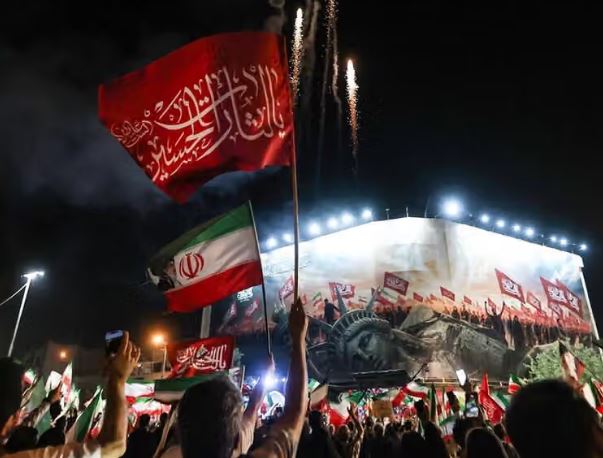
As the November 3rd midterm elections approach, observers have noted a sharp escalation in the rhetoric as Republicans use Islamophobia against the Muslim community and Muslim candidates. Political pundits interpret these maneuvers as an integral component of the Republican strategy to foster religious polarization and divert public attention from the Trump administration's economic predicaments and foreign policy quandaries. Republicans, however, maintain that these positions derive solely from legitimate security concerns and an unwavering commitment to the rule of law. The discourse and posturing of prominent Republican candidates in the lead-up to the pivotal congressional midterms indicate that Republicans have once…
Read More
Trump Escalates Iran Threats as U.S. Markets Brace for Fallout

Trump Escalates Iran Threats as U.S. Markets Brace for Fallout

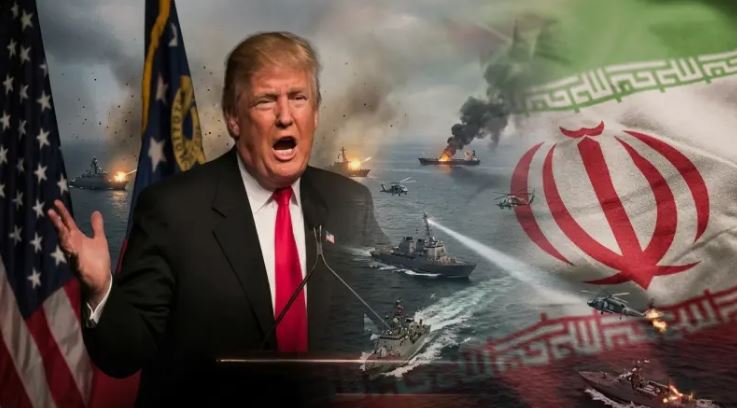
U.S. President Donald Trump escalates Iran threats, warning that he could blow the country’s key oil terminal on Kharg Island to “smithereens” as tensions between Washington and Tehran rise again.  The warning comes at a sensitive moment for financial markets, with U.S. stock futures moving lower and oil prices jumping as investors assess the risks of a wider conflict. The latest escalation followed U.S. military strikes over the weekend on two Iranian rocket launchers on Larak Island, near the strategically important Strait of Hormuz.  According to U.S. Central Command, forces linked to Iran’s Revolutionary Guard were preparing rockets carrying sea mines…
Read More
America’s First Swinging Miss: Trump’s Economic War Against Iran Already Hit US Markets

America’s First Swinging Miss: Trump’s Economic War Against Iran Already Hit US Markets

On Wednesday, U.S. President Donald Trump announced a sweeping new economic campaign against Iran, effectively launching an economic war against Iran, describing it as the “MOST CRUSHING ECONOMIC OPERATION EVER TAKEN AGAINST ANY COUNTRY” and accusing Tehran of failing to take an opportunity to reach a deal with Washington. He warned that Iran would face “Economic Warfare and Isolation on an unprecedented scale.”  Yet as Trump attempts to present the confrontation as a demonstration of American strength, its growing economic consequences are increasingly being felt beyond Iran—including in the United States itself.  Trump has also threatened countries whose banks, businesses,…
Read More
From Strength to Chaos: The Growing Risks of Trump’s Foreign Policy

From Strength to Chaos: The Growing Risks of Trump’s Foreign Policy

Donald Trump has always presented unpredictability as a source of power projection in Trump’s Foreign Policy. He wants allies and adversaries alike to believe that he is willing to take risks that other presidents would normally avoid. But in his second term, this very strategy seems to produce more unpredictability and disorder. Recent developments involving South Korea, Oman, Iran and North Korea illustrate the problem very clearly. Instead of strengthening America’s position, Trump’s latest moves risk turning allies into enemies, confusing partners and weakening the credibility of US commitments in the international stage. His latest comment regarding South Korea is…
Read More
A Collapsing Empire: Trump Profits from American Taxpayers

A Collapsing Empire: Trump Profits from American Taxpayers

While American taxpayers bear the financial burden of Netanyahu's geopolitical ambitions, the Trump family has capitalized on the pretext of war to enrich itself at the public's expense while simultaneously expanding its business empire. At the heart of this alarming reality lies a textbook example of Trump Profits from American Taxpayers – a family dynasty that turns military escalation into personal revenue streams. Former U.S. Secretary of Transportation Pete Buttigieg, in an interview with Fox News on Saturday, June 24, 2026, sharply criticized the Trump administration's military policies, saying: "Our tax dollars are being funneled into a futile conflict that,…
Read More
Trump’s Hormuz Claim: Strength, Frustration, or a Sign of Failure?

Trump’s Hormuz Claim: Strength, Frustration, or a Sign of Failure?

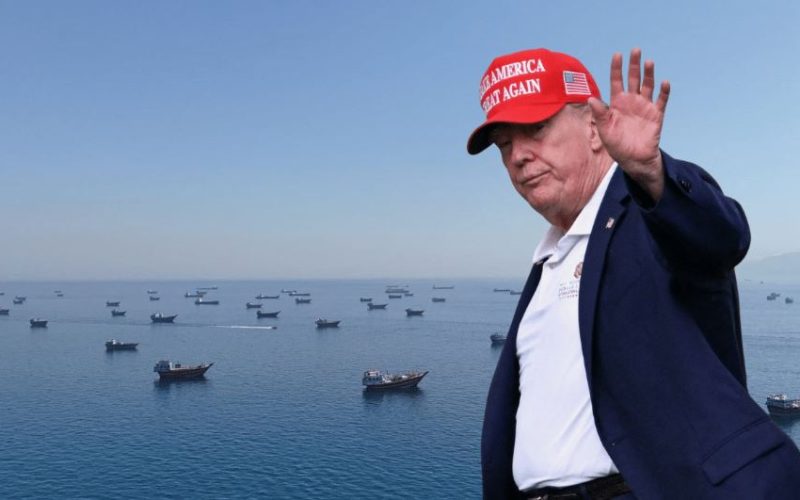
On Friday, U.S. President Donald Trump said during a speech in New York that “after we finish defeating Iran, which is being very badly defeated, pretty soon I’ll be declaring the Strait of Hormuz a territory of the United States.” Only two days earlier, Trump had claimed that the United States had “total control” over the Strait of Hormuz.  The White House later said that Trump was joking about the idea of annexing the Strait of Hormoz to the U.S. territory. Yet even if Trump intended it as a joke, Trump’s Hormuz claim remains significant. It reflects the increasingly forceful…
Read More
Trump Claims Total Control Over Hormuz: Is That Really the Case?

Trump Claims Total Control Over Hormuz: Is That Really the Case?

On August 12, U.S. President Donald Trump once again made his familiar Trump Claims Total Control Over Hormuz declaration, insisting that American forces, “and nobody else,” control the strategically important waterway.  The first problem with Trump’s statement is the difference between the notion of military presence and effective control. The United States has a powerful naval force in and around the Persian Gulf, including more than 15 warships. But having warships near the Strait does not automatically mean controlling it.  If Washington truly had complete control over Hormuz, commercial shipping would presumably be moving normally, without responding to Iranian restrictions.…
Read More
Trump is Playing with Fire in Iran—and the Whole Middle East Could Pay the Price

Trump is Playing with Fire in Iran—and the Whole Middle East Could Pay the Price

Trump is Playing with Fire in Iran—and as the U.S. President faces a critical decision over Tehran, his approach to the conflict risks turning an already dangerous confrontation into a much wider war. Analysts now warn that instead of creating greater security, Washington's increasingly aggressive strategy could draw more countries into the fighting, disrupt global energy supplies and leave the United States facing consequences far beyond the battlefield. Trump recently suspended what he described as the biggest attack on Iran since World War II after Saudi Arabia and other Gulf states reportedly urged him to reconsider. Their concerns were understandable:…
Read More
No Breakthrough, Rising Frustration: Trump’s War on Iran

No Breakthrough, Rising Frustration: Trump’s War on Iran

U.S. President Donald Trump is increasingly frustrated with Iran as his administration struggles to secure a concession from the country. After accusing Tehran of being "unbelievably duplicitous," Trump admitted that dealing with its leaders had become a source of irritation. "All they do is make me angry," he told reporters Monday. "They just make me angry." The remarks come as negotiations over reopening the Strait of Hormuz remain deadlocked, with Tehran refusing to abandon its demand for transit fees—a condition Trump has repeatedly rejected. Trump's war on Iran has entered a phase where military and economic pressure have yet to…
Read More
America’s Missile Shield Under Pressure: Iran Conflict Drains Key US Defense Stockpiles

America’s Missile Shield Under Pressure: Iran Conflict Drains Key US Defense Stockpiles

Trump’s increasingly aggressive approach toward military confrontation with Iran is now creating challenges for the United States. Latest reports suggest that the US military has used a significant portion of its advanced missile defense supplies during the conflict with Iran, leaving senior defense officials concerned about declining weapons reserves. The depletion of critical interceptor systems has raised questions about Washington’s ability to sustain prolonged military operations and respond effectively to potential future threats, placing America's Missile Shield Under Pressure.  The most serious reduction involves the Terminal High Altitude Area Defense (THAAD) system. The US military has reportedly consumed nearly 80…
Read More