
As the United States braces for an impending federal shutdown—the most grave, aberrational, and calamitous in nearly a decade—the question is no longer simply whether the government will cease functioning, but rather how long it will cohere before its institutions collapse under the weight of political paralysis and acrimony. The federal budget, once envisaged as an instrument of administrative continuity and fiscal equilibrium, is now being wielded as a cudgel of antagonism, coercion, extortion, and duplicity.
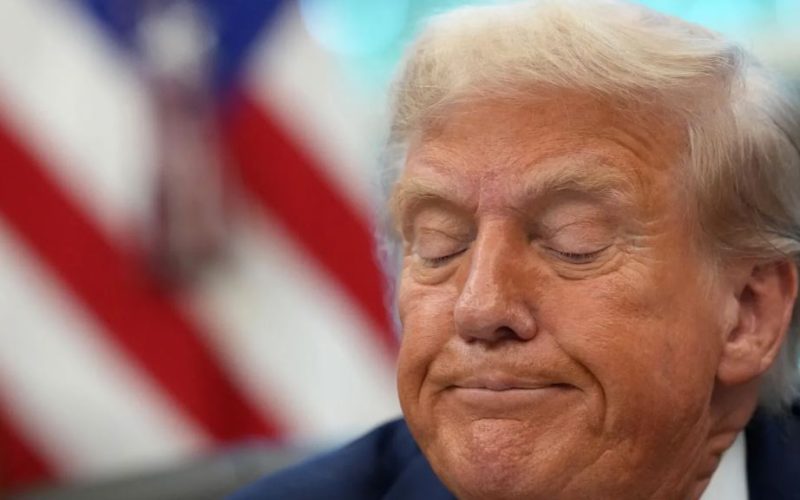
And behind this machination stands a familiar figure—Donald Trump, whose influence, far from ebbing, continues to aggrandize itself, redefining institutional balances in favor of an authoritarian and populist drift marked by demagoguery and bombast.
A Political Impasse That Has Become a Structural Threat
The proximate cause of the current budget crisis lies in the refusal of a deeply divided Congress to reach an accord on the twelve appropriations bills indispensable for the operation of federal agencies. The most obdurate, contumacious, and truculent Republicans, often aligned with Trump’s agenda, are demanding draconian retrenchments to social programs, including Medicaid and food assistance, while Democrats refuse to engage in such abnegation of essential services for ideological charades.
But this budget stalemate transcends ordinary partisan divisions. The Office of Management and Budget (OMB), acting on directives from the White House, has demanded that agencies prepare not for temporary furloughs—but for permanent redundancies, a portent that the administration is contemplating a lasting reconfiguration of the federal bureaucracy, perhaps even an attrition amounting to a deliberate dilapidation of the civil service.
Trump: Architect of a Governance Based on Fear and Terror
He leans into a bellicose, and vitriolic style, wielding the budget as a weapon against his political opponents while shoring up his shrinking base. Democrats, he claims, are “holding the country hostage,” as he circulates defamatory deepfake videos and even co-opts agencies like HUD to attacks on official platforms.
More fundamentally, Trump is attempting to arrogate prerogatives beyond his remit: by challenging Congress’s constitutional authority to allocate funds, and by freezing or withholding their disbursement, he contravenes core principles. He has also sought to eviscerate oversight bodies (notably the Inspector General’s Office), thereby enfeebling their capacity to investigate executive malfeasance, duplicity, and impropriety.
Blind Budget Cuts: The Social Safety Net Sacrificed
The executive branch’s proposed budget includes savage retrenchments and austere contractions, including a 26% diminution for the Department of Health and Human Services, imperiling medical research, pandemic prevention, and care for the elderly and vulnerable households.
Under extant plans, HHS would be compelled to discharge more than 40% of its personnel, while 75% of the National Institutes of Health (NIH) and 64% of the CDC staff would be furloughed. In this context, critical services such as Medicare, FDA inspections, and telehealth for seniors risk being paralyzed.
Even national parks—symbols of public patrimony—could remain open without stewardship, leaving them susceptible to vandalism, uncontrolled conflagrations, and accelerated dilapidation and despoilment.
When the Budget Becomes a Political Weapon
What is transpiring here is not merely a partisan altercation, but a perversion and travesty of the role of the budget. Normally conceived as a national roadmap, it is now distorted into an apparatus of pressure, chastisement, and division. This logic engenders a vicious cycle: without a budget resolution, government operations are suspended, services disrupted, and public trust in governance atrophies and disintegrates.
The prevailing system relies on “continuing resolutions,” these temporary fiscal expedients, which have degenerated into a toxic simulacrum of authentic planning. This perpetual state of emergency enervates, corrodes, and eclipses the government at all levels, producing not stability but acrimony, antagonism, and chaos.
Are We Going Towards Institutional Disintegration?
The risk is no longer hypothetical. It is real and exigent. If this shutdown endures, some agencies may never recuperate their former efficacy. Talented staff will be dispossessed, projects will be abandoned, and the image of the federal government as a guarantor of the common good will be profoundly denigrated and stigmatized.
But the most disquieting aspect remains the normalization of volatility: a polity that threatens to shut down annually becomes incapable of governing with authority. A sense of democratic
fatigue congeals, a collective disillusionment, an institutional nihilism that paves the way for extremism in its most macabre, appalling, and deleterious forms.
Conclusion: The Urgency of Democratic Reform
The time for institutional renewal is urgent and cannot be deferred. Congress must reclaim its prerogative as the true arbiter of public spending, and mechanisms must be put in place so essential functions remain impervious to political games or executive usurpation.
Beyond budgets and procedures, the deeper problem is that power has enthralled some with avarice, duplicity, and hubris. As long as the state lingers on this precipice, the nation remains in jeopardy. It will take bold, measured, and fearless action to restore balance and reaffirm the moral foundation of our governance. Now is the time for a genuine revival of democratic purpose—a clear reminder that resilience grows not from hesitation or fear, but from deliberate and courageous action.