
“Had I but served my God with half the zeal I served my king, he would not in mine age have left me naked to mine enemies.”
Shakespeare, Henry VIII.
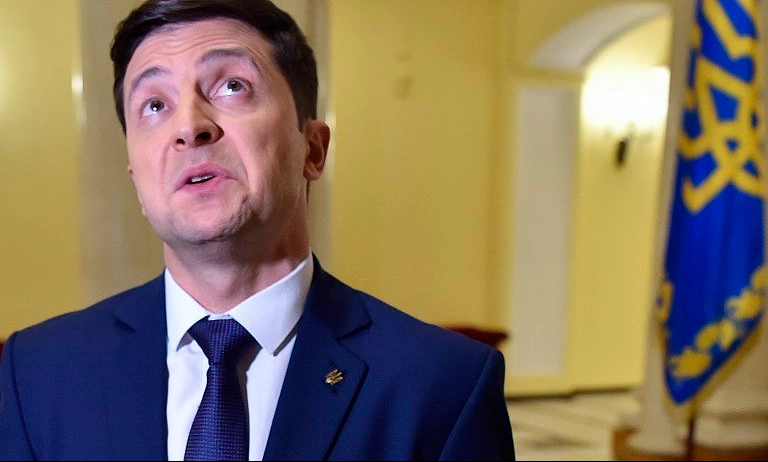
In his latest remarks, Volodymyr Zelenskyy, the Ukrainian president and an erstwhile comedian, faces with Trump’s ultimatum to relinquish large swaths of Ukraine’s eastern territories to Russia, stated that he had only two options: to choose between Ukraine’s sovereignty and maintaining an untenable alliance with Trump in the White House.
The Price of Trusting Uncle Sam: How Ukrainians Lost National Honor and Independence
Today, many observers are questioning whether Ukraine’s leaders, former or incumbent, can recognize any tangible lessons from the catastrophic repercussions of their reliance on the United States.
The genesis of Ukraine’s current geopolitical predicament can be traced nearly three decades ago; with the collapse of the Soviet Union, Ukraine inherited an important part of the Soviet nuclear arsenal.
The Soviet nuclear arsenal situated on Ukrainian territory included over 1,900 strategic nuclear warheads, 176 intercontinental ballistic missiles (including SS-19 and SS-24), and warplanes, which made Ukraine the third-largest holder of nuclear arsenals worldwide.
Yet, on December 5, 1994, Ukraine, relying on empty American pledges, signed an accord that resulted in the relinquishment of its nuclear weapons, a critical element of its sovereignty. Almost three decades later, on February 24, 2022, Ukraine, once again naively, succumbed to America’s assurances concerning Kyiv’s membership in NATO, therefore launching an existential conflict with its formidable eastern neighbor, Russia.
So, John Mearsheimer, the prominent political scientist and a professor at the University of Chicago,’s words are true when he said that United States policies caused the devastating ongoing war in Ukraine.
The reality is that American policymakers deem Ukraine solely as collateral damage in their interplay. Thus, the root cause of this conflict is the US effort to remake Ukraine into an offensive stronghold next to the Russian borders. As a matter of fact, if US-led NATO had not expanded in the aforementioned manner, the nearly four-year devastating conflict in Ukraine would not have occurred.
In essence, four years of devastating conflict have culminated in tens of thousands of casualties, hundreds of thousands of injuries, 10 million refugees, and over a trillion dollars in damages to the country’s infrastructure, all while it is quite evident today that Ukraine has lost almost twenty percent of its eastern territories.
Therefore, the country now faces an uncertain future, having been forced to cede its nuclear arsenal around 28 years ago in reliance on enticing promises from Washington, as described by Zelenskyy, between “national honor” and “American support.”
However, who bears the responsibility for creating this dichotomy between Ukraine and Russia?
President Trump can answer to this. He has threatened to relinquish Ukraine to Russia if it fails to accept his proposed peace plan.
His proposed peace plan consists of 28 articles, which are outlined as follows: Ukraine’s relinquished territories will remain under Russian control, Moscow has committed to terminating its military engagement in Ukraine, and if Vladimir Putin fails to adhere to this, military retaliation against Russia is, purportedly, inevitable.
From Gaza to Donbas: Transplanting Trump’s Plans Across Continents
It was last week that Axios—a US-based intelligence website—reported, citing US and Russian officials, that Washington is clandestinely working with the Kremlin on a plan to settle the Ukraine dilemma.
According to the report, some elements of President Trump’s Gaza strategy shaped a 28-point roadmap that would require Ukraine to recognize Crimea, Luhansk, and Donetsk as de facto Russian territories and to accept the current front lines, thereby stabilizing control over the southeastern oblasts of Kherson and Zaporizhzhia.
The proposal would also have Ukrainian forces withdraw from remaining pockets within Donetsk to create a buffer zone internationally designated as Russian territory, even though Russian troops would not break into that zone.
In return, the plan promises a “coordinated and resolute military response” if Russia renews a major onslaught against Ukraine—though the leaked document does not stipulate what role, if any, the United States would play in carrying out such a scenario.
The Choice Between National Honor and Capitulation
Many Western media outlets have suggested that after President Volodymyr Zelenskyy met with US War Secretary Pete Hegseth and other Pentagon officials to discuss Donald Trump’s contentious 28-point peace proposal, he was effectively cornered — with little real leverage to reshape either the US or Russian terms.
Upon his return to war-torn Ukraine, Zelenskyy pushed back. In a sober video address, he warned his people that Ukraine is standing at a crossroads in one of its darkest hours.
Zelenskyy said: “Ukraine is living through one of the most difficult moments in its history. The pressure on us is among the heaviest. Now we face a very difficult choice — either the loss of our dignity, or the risk of losing a key partner, or accepting the 28 difficult points, or enduring the harshest winter we have ever encountered.”
He sought to frame it starkly: agreeing to the plan could mean “life without freedom, without dignity, without justice,” and would require trusting those who “have already attacked us twice.”
Despite the mounting pressure, he insisted that Ukraine would continue to negotiate — not capitulate. He pledged to work “calmly and swiftly” with the US and European partners, to present counter-proposals, argue forcefully, and persuade. However, he was equally firm that under no circumstances would he give Russia an excuse to claim Ukraine does not want peace or is unwilling to engage in diplomacy.
He underscored his commitment to Ukraine’s national interest: “We did not betray Ukraine then (in 2022), and we will not do so now.”
Trump and the EU: The widening transatlantic Chasm
In the meantime, the European Union expresses strong disapproval of Trump’s plan and has vehemently rejected nearly all parts of it. In response to the American proposal, the leaders of Germany, France, and Britain stated that any peace plan is acceptable only if Kyiv and the Europeans are completely involved in negotiations, Ukraine’s territorial integrity is maintained, and long-term security assurances are provided for the country.
The Prime Minister’s Office at 10 Downing Street issued a communiqué on Friday evening confirming that Prime Minister Keir Starmer had conducted telephone discussions with French President Emmanuel Macron, German Chancellor Friedrich Merz, and Ukrainian President Volodymyr Zelenskyy on Friday afternoon.
According to the statement, the leaders of all four countries renewed their unwavering unequivocal commitment to a just and enduring peace for Ukraine and emphasized that any resolution must be achieved with Ukraine’s complete consent.
Zelenskyy and Trump’s Deadline Game
With regard to U.S. interests, the country possesses no clearly identifiable allies or adversaries, as Foreign Policy recently observed: Washington’s ongoing suspension of aid to Ukraine serves as a significant lesson for all those who regard Trump as their ally.
Although some of them have tried to curry favor with Trump and indulge his narcissistic personnalité, Washington’s European allies must acknowledge that if they do not fulfill Trump’s expectations, the United States is prepared to abandon in the blink of an eye its prior commitments and deals — with no qualms at all.
Trump corroborated this fact in an interview with Fox News on Friday, saying that his administration has established a deadline of Thursday, November 27, for Ukraine to accept the White House’s 28-point plan to conclude the war. He further explained, “I have had numerous deadlines, but if circumstances are favorable, we typically obtain extensions.” However, he insisted, Thursday remains the final deadline.
According to NBC News, citing three US officials, who spoke under anonymity, the White House wants Kyiv to agree to a framework for ending the conflict by Thanksgiving (Thursday), based on the U.S.-devised 28-point peace plan.
Washington has allegedly warned Ukrainian officials that they must endorse the framework of Trump’s 28-point plan by next Thursday; otherwise, the United States will suspend intelligence sharing and halt arms supplies to Ukraine. The same media outlet noted:
“The aspiration to accomplish this objective by next Thursday has been conveyed to the Ukrainian government, although officials emphasized that the deadline is more of an aspiration than a definitive timetable.”
American officials told NBC News that negotiations to resolve the conflict will prove exceedingly complex and are likely to require more than a week. Meanwhile, Russia has cautioned Ukraine that failure to embrace the arrangement could lead to additional territorial losses “on a daily basis.” According to the state-controlled TASS news agency, Russia presently holds approximately 20 % of Ukrainian territory.
Conclusion: Woe to you, O land, when your king is a fool!
Exploiting Zelenskyy’s political vulnerability, a British media report quoted European officials in Brussels as an explanation for the United States’ stringent, or better to say insolent, enforcement of its peace plan on Ukraine, citing the fragile and precarious political standing of the country’s president.
Concerning this point, Financial Times reported that an American delegation, led by US Secretary of the Army Daniel P. Driscoll, convened with European officials on Friday in a meeting that was deemed “nauseating” by EU representatives, reflecting the scant respect and disdain the Americans hold even for their own European allies.