
Trump is Playing with Fire in Iran—and as the U.S. President faces a critical decision over Tehran, his approach to the conflict risks turning an already dangerous confrontation into a much wider war. Analysts now warn that instead of creating greater security, Washington’s increasingly aggressive strategy could draw more countries into the fighting, disrupt global energy supplies and leave the United States facing consequences far beyond the battlefield.
Trump recently suspended what he described as the biggest attack on Iran since World War II after Saudi Arabia and other Gulf states reportedly urged him to reconsider. Their concerns were understandable: a major American assault could provoke a powerful Iranian response against U.S. bases, Gulf territory and energy infrastructure. Yet Trump’s willingness to contemplate such an operation highlights the central weakness of his strategy—he treats escalation as a solution even when its consequences are difficult to control.
The danger is particularly serious for Saudi Arabia. Riyadh has spent years trying to reduce tensions with Tehran and concentrate on its economic transformation. Its Vision 2030 program depends heavily on stability, investment and reliable energy exports. A regional war would threaten all three. Trump’s reported consideration of attacks against Iranian oil production, energy terminals, electrical infrastructure, bridges and nuclear facilities would represent an important escalation.
The Civilian Catastrophe: How Bombing Iran’s Lifelines Could Backfire Brutally
These are not simply military targets. Striking them could damage the basic economic and civilian systems on which Iranian society depends. Such a strategy could also produce the opposite of what Washington wants. Rather than forcing Tehran to retreat, attacks on critical infrastructure could convince Iranian leaders that the United States is seeking to threaten the survival of the Iranian state. Facing that perception, Iran could become more willing to use every tool available to retaliate.
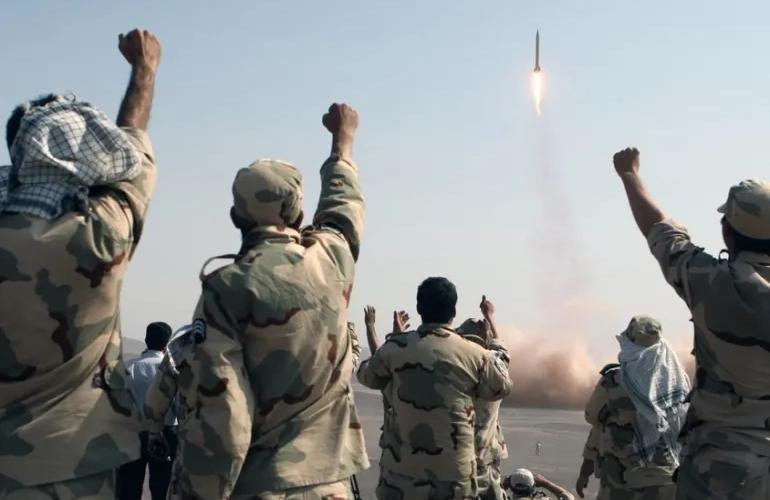
Precisely because Trump is Playing with Fire in Iran, Iran does not need to defeat the United States militarily to impose serious costs. It has ballistic and cruise missiles, drones, cyber capabilities and regional networks that can threaten American forces and allies. More importantly, Tehran has the ability to put pressure on some of the world’s most important energy routes. The Strait of Hormuz is the clearest example. Roughly one-fifth of internationally traded oil passes through this waterway.
The Global Choke Points: From Hormuz to the Red Sea
Any prolonged disruption could, as we have seen before, send oil prices sharply higher, increase shipping and insurance costs, and intensify inflation around the world. The Red Sea presents another potential vulnerability. Continued confrontation involving Saudi Arabia and the Iran-backed Houthis could threaten the Bab el-Mandeb Strait, another crucial water passage for global trade. If both waterways suffered disruption, that disruption could force shipping companies to reroute vessels around Africa, creating longer journeys and much higher transportation costs. The economic consequences of such a scenario, given that Trump is Playing with Fire in Iran, would not confine themselves to the Middle East. American consumers could face higher gasoline and transportation costs, while Europe could experience another energy shock.
Developing countries, many of which are already economically vulnerable, could suffer even more severely. Major Asian economies—including China, India, Japan and South Korea—could also face serious pressure because of their dependence on Gulf energy. Israel’s role makes Trump’s calculations even more complicated. Israeli leaders have argued that Washington must severely weaken Iran’s nuclear and military capabilities.
The Uncontrollable Inferno: Why Israel, Allies, and America’s Own Future Hang in the Balance
If Washington expands its campaign, Israel could interpret that as an opportunity to intensify its own attacks. Iran would then have even greater incentive to strike Israel, American bases, and U.S. partners throughout the region. The problem is indeed not simply one military operation, it is the chain of reactions that could follow. Trump may believe that overwhelming force will restore American deterrence, but because Trump is Playing with Fire in Iran, military power does not automatically produce political stability.
America’s experiences in Iraq, Afghanistan and Libya demonstrate how wars that begin with clear military objectives can become prolonged and unpredictable. Iran presents an even greater challenge because of its size, strategic position, military capabilities and extensive regional relationships. Last but not least, the Persian Gulf is already dangerously close to that threshold. Trump therefore faces a choice between demonstrating restraint and gambling on escalation. Continuing down the current path could prove far more costly than the administration expects—and once a wider regional war begins, there may be no easy way for Washington to control where it ends.