
In this analysis, I strive to proffer a realistic examination of the two wars waged upon Iran—the eight-year war between Iraq and Iran back in the 1980s and then the twelve-day conflict in June 2025—from a US strategic perspective. I will endeavor to demonstrate why, despite the preponderant material power of the adversaries, Iran emerged triumphant in both cases; I shall explore the catalysts and real determinants of asymmetric warfare, its economic and psychological repercussions, and the systemic factors behind the inability of the great powers to adjust to this dynamic.
The Geopolitical Context and External Support
During the Iran-Iraq War from 1980 to 1988, the United States provided military, political, and economic support to Saddam; in addition, the USSR had entered into a fifteen-year contract to supply military equipment, while China provided arms to both sides, and Europe supplied chemical weapons to Baghdad. German doctors, instead of observing medical ethics, examined the wounded Iranians and transmitted data to the Iraqis. Kuwait and Saudi Arabia provided billions in subsidies, opening their ports to the Iraqi navy. The United Arab Emirates offered media and diplomatic support, and Jordan sided with Baghdad. Although Turkey played a role, Pakistan and Oman maintained their official neutrality. Israel, for its part, hailed this war as a godsend.
Prior to the war against its eastern neighbor, Iraq possessed reserves of $25 billion, and during the conflict, spanning from 1985 to 1995, it garnered direct aid or loans worth between $85 and $95 billion. In this international milieu, Iran found itself facing a global coalition.
Iranian Resilience: Faith, Organization, and Strategy
Saddam’s invasion caught Iran off guard because the army was unprepared, and the IRGC was primarily focused on security tasks. The Iranian leadership, first under the late Ayatollah Khomeini and then under Ayatollah Khamenei, redirected political and moral resources to transform this vulnerability into strength. Hence, Iran withstood the onslaught because it remained faithful to a cardinal tenet: resisting imperialism.
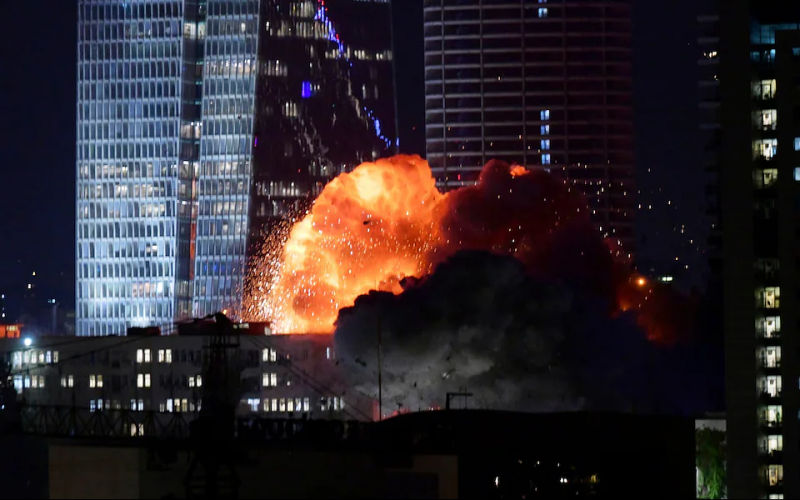
In the recent twelve-day conflict, Israel, which had in effect become a de facto satellite of the United States, could not last even a day without American support. From the second day of the conflict, the United States provided military, economic, and political support. This conflict was essentially a war between the US and Israel against Iran. Despite the aggressive deployment, the Iranian resistance forced the withdrawal of the foes. Trump, by miscalculation, put Israel first, but the strategic equation shifted. Iranian victory is not based on external force but on the ability to successfully implement an asymmetrical military posture.
Asymmetric Warfare: The Foundation of an Effective Strategy
Asymmetric warfare refers to a modus operandi in which the weaker side eschews direct engagement in favor of flexible and creative tactics. The conventional enemy, which in this case refers to the United States and Israel, allocates expensive platforms such as aircraft carriers and anti-missile systems, while the “weaker” adversary deploys simple, cost-effective, yet unpredictable weapons like drones, suicide boats, and concentrated attack waves.
In a 2002 US military simulation (“Millennium Challenge”), Iran “won” against US superiority precisely because it could use asymmetric tactics. And when the rules were changed to deprive Iran of such options, the United States won—not because it understood the strategy, but because the battlefield was distorted.
This asymmetry also emanates from cost: a US aircraft carrier costs nearly a billion dollars. However, the cost of fabricating hundreds of drones or kamikaze boats ranges from ten to thirty million dollars, which is a modest fraction compared to the expenses associated with massive deployments.
Amid the Iranian missile attacks on Israeli military target and assets, Iran spent approximately ten to thirty million, while Israel spent over a billion on defenses. The structural constraints and limitations of the US, along with the influence of strategic psychology, are significant factors in military strategy.
In fact, bureaucratic inertia, hubris, and political intransigence often ensnare superpowers, such as the USSR and the United States. They favor conventional conflict and assume unconventional tactics are unfair. This predilection was already evident in simulations: when Iran was permitted to use asymmetric tactics, the United States lost; however, when these tactics were excluded, the outcome became favorable to the United States—an artifice rather than a genuine adjustment. In fact, bureaucratic inertia, hubris, and political intransigence often ensnare superpowers, such as the USSR in the past and the United States today. The adversary used guerrilla warfare, knowledge of the terrain, and psychological attrition to impose its logic.
For Iranians, choosing asymmetric warfare is not simply a matter of pragmatism: it is a coherent strategic response. The psychological and economic attrition inflicted on the adversary is growing exponentially; the adversary is forced to expend disproportionate amounts of money to mitigate inexpensive but formidable threats. In the long run, this imbalance weakens the growth of the adversary.
Conclusion
Ultimately, the analysis indicates that the United States “lost” in both the eight-year war and the twelve-day conflict—not from a conventional perspective, but according to the strategic criteria dictated by war ideologies. Iran, through a successful integration of resistance, faith, and asymmetric tactics, has transformed its constraints into resources.
Now, what are the key lessons? In modern military confrontation, material superiority does not guarantee the outcome. War is now fought in the realm of cost, adaptation, and social psychology. Faced with the hubris of empires, an adaptive posture can reverse the balance of power. To confront this paradigm, the great powers must reappraise their doctrines and accept that the future dynamics of warfare belong to those who know how to embrace the unexpected and exploit contingencies.
Note: The author, an emeritus professor of political science at the University of Arkansas, remains anonymous due to the U.S. government’s campaign against free speech, which poses risks to dissenting scholars.