
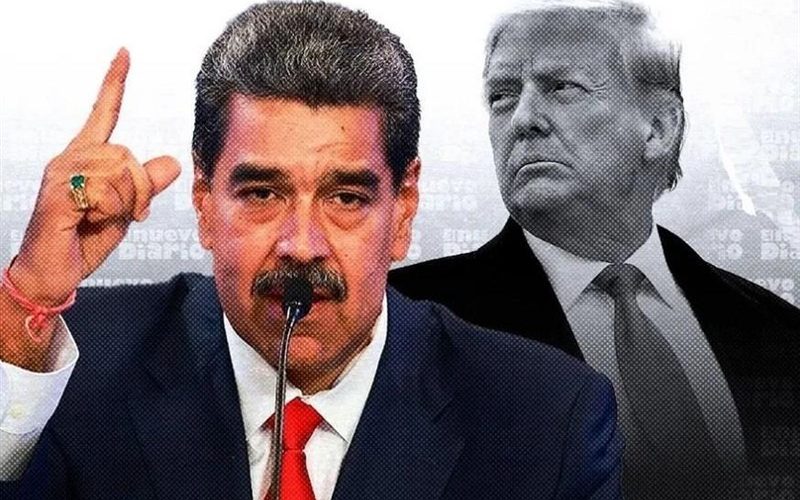
The conundrum for the United States in Venezuela is the exigent non-surrender of a colossal segment of the population. According to some observers and certain reports, the US military is steadily intensifying its actions against Caracas. Last Saturday, it targeted another boat off the coast of Venezuela, claiming drug trafficking. Gustavo Petro, president of Colombia, has become a vocal critic of Donald Trump’s actions. He condemned the targeting of the boat, which caused the deaths of eleven people. He called it “the murder of poor Caribbean youth.” Petro rejected the US claim of a war on drugs. He insisted that the traffickers do in fact find sanctuary in the United States, Europe, and Dubai. Nicolás Maduro is the target of a $50 million US bounty. The United States accuses him of being the leader of drug cartels.
Uncle Sam’s Agendas and Military Escalation
Here are some points regarding the imbroglio between the United States and Venezuela. Some media sources aver that Washington is considering attacking Venezuela. However, the operation would have limited objectives, such as the capture of ports and airports. This assertion is consistent with Washington’s martial stance. The forces sent, while powerful, remain insufficient for a full-scale invasion. Therefore, the United States would seek to conduct a limited yet rapid operation. In this scenario, American forces and disgruntled Venezuelan groups would seize several ports and airports. This is the first stage.
In the second stage, Washington would threaten a broader war and the destruction of infrastructure. They would aim to force a cessation to the fighting and consolidate their presence in the occupied areas.
However, if Caracas refuses to cease fighting, stabilizing positions would become extremely onerous. The third stage would entail the economic exploitation of the conquered territories to reduce the central government’s financial power.
This vulnerability would then be transmuted into a linchpin of coercion. Control over ports and airports would inevitably reduce the flow of traders and investors, thereby stifling Caracas’s commerce.
Oil exports to certain clients would likely be disrupted or blocked. These events would weaken the central government’s economic power. Furthermore, the United States would use the authorization of goods to enter Venezuela as leverage. It would levy customs duties that would raise prices. This would increase instability in government-controlled areas. In exchange for political and economic boons, Washington would allow certain imports. For example, it would demand the withdrawal of government military forces from captured ports. When these conditions were met—ready sea and air bases—the situation would change.
The government’s economic weakness and the consolidation of the insurgents would increase. Border attacks by terrorist groups and US-paid mercenaries would intensify. Contiguously, demonstrations would be encouraged to sow instability in government-controlled areas.
The ultimate phase would consist of simultaneous actions from northern Caribbean ports and airports. Militias would move from uncontrolled areas toward the capital. Sleeper cells would be activated, and assassinations of civilian and military officials would be considered. This, however, is the American plan. In practice, execution is not as simple as designing the plan. Even if the plan is precise and drafted by experts, its implementation remains uncertain.
Operational Limits and Popular Resistance
The major problem in Venezuela remains the possible non-surrender of a large portion of the population. Despite their power, the United States’ forces on Venezuela’s outskirts are few in number. The US naval fleet and a few F-35s have been deployed, demonstrating American power. They can conduct targeted operations against bases, orchestrate assassinations, and seize a few ports or airports. These actions are reportedly carried out in coordination with certain insurgents.
This shows that Washington does not seek to infiltrate deeply into Venezuelan territory for the time being. The maximum depth targeted seems to be circumscribed only to the strategic areas in the north of the country.
During his first term, Trump considered a military attack against Venezuela. Given Washington’s recent act of aggression against Iranian nuclear facilities, the risk of a military confrontation with Caracas is high. It is likely that he will activate the military option against Venezuela. The implementation of certain previous plans increases the likelihood of activating other projects. Thus, the military scenario must be read in the context of strategic continuity. They are no longer Uncle Sam’s backyard and demand respect for their sovereignty.
Venezuelan Army and Asymmetric Capabilities
The Venezuelan conventional army cannot match the United States. However, the country’s military power is not limited to conventional forces:
- In terms of personnel, the Venezuelan army does not resemble those of Asia, Europe, or Africa. The number of tanks, anti-tank missiles, and artillery is modest. The number of soldiers in service remains lower than that of the armies of the Old World. Venezuela, with a population of approximately 30 million, has an army of 137,000 men. Saudi Arabia, with a similar population, has 257,000 soldiers, twice that number. North Korea, with a population of 25 million, has an army of approximately 1.1 million men. This is eight times Venezuela’s size. Jordan, with a population of 11 million, has an army of 100,000 men.
- Despite its smaller population, its strength borders that of Venezuela. The Jordanian army outclasses Venezuela in the number of tanks, artillery, and anti-tank missiles. 2. On the ground, Venezuela appears weak in manpower and equipment. However, widespread public mobilization can counteract this weakness. On the other hand, Russian Buk and Antey-2500 systems bolster air defense. The Antey-2500s, related to the S-300, offer advanced capabilities. They are primarily aimed at neutralizing missile attacks rather than low-level air threats.
In aviation, Venezuela’s main asset is its twenty-one Sukhoi-30s. These resources prevent some US allies from becoming involved in Washington politics. Caracas can also defend itself against limited US operations. However, an invasion aimed at occupation would require an enormous volume of men, ships, and aircraft. The current posture does not reflect such a capability. Venezuela’s hope lies in acquiring asymmetric capabilities from its allies.
These capabilities compensate for the conventional gap with the United States. In the air, Venezuelan fighters will never fully match American forces. They are inferior in number, quality, training, experience, and armament. Yet, drone capabilities offer an asymmetrical gateway to counter American air superiority. At sea, fast boats, anti-ship cruise missiles, and suicide drones can threaten a large armada.
For example, the Yemenis forced two American aircraft carrier groups to withdraw. On the ground, Venezuela relies on mobilized popular forces. Armed with light weapons and present throughout the country, they demonstrate courage and self-sacrifice. Without continuous supplies, they cannot - sustain a protracted war on all fronts. A similar scenario inflicted heavy losses on the Americans in Iraq and Afghanistan.
Geopolitical Calculation and Internal American Resistance
What is the American gambler seeking in Venezuela? Trump’s motivations include both insincere hatred of drug traffickers and concerns beyond regional security. He wants to use this pretext to expand his influence against China, Russia, and Iran. Last week, the White House sent a letter to Congress. The United States claims, albeit speciously, to be involved in a “non-state armed conflict” with the cartels.
On this basis, several limited strikes have targeted boats near Venezuelan waters. The White House presents these operations as a defense of homeland security. It claims to be acting to prevent the entry of “deadly cargo” onto American soil. These actions quickly sparked an intense legal and political debate. The media report that the executive branch used the term “armed conflict” to support its position. Yet, no tangible evidence has been disclosed so far.
In practice, the execution ranges from airstrikes to the dissemination of videos of incidents. These actions appear less like anti-trafficking operations than geopolitical and authoritarian displays.
Behind this “anti-trafficking” charade, Washington’s evidence and behavior suggest a broader objective. They aim to weaken the influence of the United States’ strategic partners in Latin America. Recently, Venezuela has forged close ties with China, Russia, and Iran. Washington strongly fears the expansion of Beijing and Moscow’s influence in the region. Recent documents and analyses confirm this. The positions of the Southern Command and US intelligence services characterize this rivalry as a central threat. Thus, the pretext of “fighting trafficking” offers a security justification. It serves to carry out limited military machinations near the coast of Caracas. At the same time, Washington is increasing political and diplomatic pressure on Maduro and his foreign supporters. This geopolitical motivation is evident, especially in the setting of large bounties against Venezuelan officials. And after the intensification of sanctions, the United States is targeting several Chinese investments, from the Panama Canal to TikTok. Today, the Venezuelan case also involves Beijing capital estimated at sixty billion dollars.
Washington has enforced share transfers in Panama and TikTok; however, in Venezuela, such pressure would endanger Beijing. In the event of an operation, the United States would employ F-35s, aircraft carriers, and carrier-based aircraft in Puerto Rico. Some of the closest points in the United States to Venezuela are located in South Florida, specifically Miami. Caracas is situated at a distance of approximately 2,100 kilometers. US bombers and some fighters have the capability to attack Venezuela from American soil. The distance constraint could be mitigated by employing long-range weapons. Nevertheless, Washington has elected to establish its points of origin outside of its jurisdiction. The objective is to prevent Caracas from asserting that it is under attack in the heart of the United States. The situation would be altered if the Shahed drones reached Venezuela. This drone has been replicated by numerous nations, including US allies. This would enable Caracas to strike targets on US soil. This policy is facing resistance and opposition in the United States.
This indicates that a major offensive or declaration of war remains unlikely. Lawmakers are demanding evidence, transparency, and legal justification. Democrats in Congress and other elected officials have introduced war powers legislation to limit the executive branch. The goal is to restrict the executive branch and prevent unilateral actions without a congressional mandate. At the same time, some allied Republican senators support a “hard line” against “narcoterrorism.” BIts figures, like Rand Paul and some moderate Republicans, criticize the lack of transparency.
This partisan gap demonstrates the lack of a public and legal basis for an all-out adventure. Congress can therefore play a deterrent role. Parliamentary resistance can use legal tools to limit the executive branch. This tool includes resolutions, impeachment injunctions, and budget cuts. It reduces the government’s operational scope. Some Democratic representatives in the United States and their constituents oppose Trump’s aggressive actions in the Caribbean. Thus, domestic political pressure is dampening presidential enthusiasm.
Conclusion
Overall, letters, reports, and Congressional reactions show that the “fight against cartels” is nothing but a façade for US agendas. For Trump, it is a tool to regain or consolidate American clout in Latin America. It is about countering the expansion of China, Russia, and Iran. However, this instrument faces significant legal and political limitations. These limitations reduce the potential for all-out war. These days, Donald Trump’s conduct calls into question his pacifist claims. His “war on drugs” often appears to be mere media hype. While using words of peace, he is adopting aggressive policies in Latin America. The recent strikes illustrate a broader strategy of ousting geopolitical competitors. Trump is using this pretext to gain public and parliamentary support. In practice, he is pursuing a hegemonic path likely to lead to regional escalation.
The method is continuous pressure, not all-out war, but it remains dangerous and fraught with consequences. They are no longer Uncle Sam’s backyard and demand respect for their sovereignty. The time calls for dialogue, international law, and mutual respect between neighbors. Are they no longer Uncle Sam’s backyard? They are no longer Uncle Sam’s backyard and demand respect for their sovereignty. Democrats, broad public opinion, and the law must curb belligerent temptations. The United States must respect the sovereignty of its South American neighbors, now independent and demanding.