
Donald Trump once presented himself as America’s infallible savior—a man who alone could “fix it all.” Yet today, reality and perception collide, exposing fragility beneath his bravado. Republican strategists quietly plan a post-Trump future while he remains politically alive. Evangelicals reconsider loyalties, artists flee institutions he tries to co-opt, and global observers mock America’s dysfunction. In short, Trump’s cultural and social collapse is no longer hypothetical but a tangible reality reflected across politics, culture, and society. Trump’s myth of inevitability dissolves into farce, setting the stage for a national reckoning.
The Republican Great Fracture?
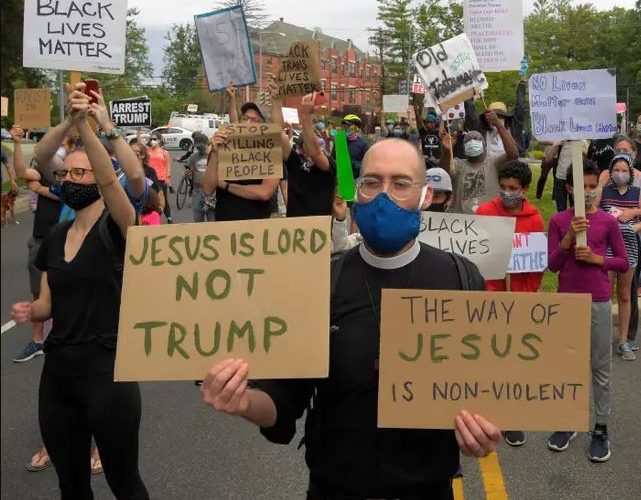
Within the Republican Party, fractures deepen as loyalty falters. Populist bases still chant his name, yet establishment Republicans, corporate donors, and suburban conservative organizers now treat him as electoral poison—incapable of winning swing states. Strategists court Hispanic economic conservatives, traditional evangelicals, and exhausted business Republicans, preparing for a post-2026 realignment. Meanwhile, evangelical youth question whether Trump is “God’s chosen fighter,” seeing an aging figure who embarrasses their faith. Mega-church networks debate whether authoritarian populism spiritually corrupts Christianity’s public image. These fissures underscore Trump’s cultural and social collapse, visible in both political and religious spheres.
His Economic Mythology Unravels
Trump’s central narrative— “I alone can resolve it”— falters as inflation, wage pressures, and mounting debt increasingly bear his imprint, even among working-class voters he once claimed to champion. Americans begin distinguishing “economic data” from “economic dignity,” realizing that Trump-era policies masked structural decay beneath glittering rhetoric. Cultural institutions such as the Kennedy Center suffer direct consequences: ticket sales and audience attendance plummet more under his interference than during pandemic restrictions. Tens of thousands of empty seats now stand as proof of Trump’s cultural and social collapse, particularly in America’s artistic and civic life.
Global Image and Institutional Vandalism
Abroad, Trump increasingly symbolizes American weakness. Europe, Canada, South Korea, and Latin America depict the United States as a chaotic empire cannibalized by extremist politics. Domestically, his board overhauled Kennedy Center bylaws to exclude congressional trustees, enabling a unilateral renaming without legal authority. Legal experts, the Kennedy family, and Democratic leaders insist that federal law forbids such renaming without congressional approval. This overreach demonstrates that Trump’s cultural and social collapse extends beyond politics into institutional governance, transforming a historic cultural shrine into a partisan plaything.
Intellectuals Revolt and Media Resistance
Performers now withdraw en masse. Chuck Redd canceled decades-long traditions when Trump’s name appeared on the Kennedy Center facade. Groups such as The Cookers and Doug Varone and Dancers rescinded scheduled performances for moral reasons. Even New Year’s Eve, April, and community shows face cancellation, signaling that previously apolitical artists refuse to lend legitimacy to Trump’s self-branding. Networks also resist: CBS preserved the original Kennedy Center Honors name, trimmed Trump’s twelve-minute monologue, and refused to amplify his vanity. Collectively, these actions reflect Trump’s cultural and social collapse, revealing the retreat of institutions once assumed to legitimize him.
Christian Denominations in Turmoil
In assessing Trump’s standing among religious voters, the picture is complex and, increasingly, fractured. While white evangelical Protestants have historically stood as one of Trump’s most loyal constituencies, recent data reveals cracks even within that base. According to a Pew Research Center survey, white evangelical Protestants remain more favorable toward Trump than most other groups, but approval has slipped compared with previous terms, and trust in his statements shows signs of strain. Trump’s cultural and social collapse among Christians does not look like a uniform desertion, but it does reflect a broader schism in how faith communities perceive his leadership and moral authority.
In contrast, other Christian denominations are less steadfast. White non‑evangelical Protestants and white Catholics show roughly even splits in approval and disapproval, with many expressing reservations about his governance and ethical conduct. Across a broader swath of Christian America, majorities now rate his performance unfavorably—a notable shift from earlier years when Christian identity translated more directly into political support.
These emerging patterns reflect deeper tensions within Christianity itself. Younger Christians, in particular, are questioning the historical alliance between faith and partisan politics, and some believers critique the conflation of evangelical identity with unwavering political loyalty. The result is a shifting religious landscape where tribal allegiance to a political figure increasingly clashes with personal conscience and faith.
Conclusion: Can America Reclaim Its National Pride?
Trump’s political, cultural, and moral myths lie in ruins. The Republican Party quietly readies life after him, evangelicals question their spiritual alignment, Americans understand the limits of economic nostalgia, artists withdraw, networks resist, and global opinion scorns his leadership. Marjorie Taylor Greene’s tax-revolt rhetoric illustrates fractures within his base as Americans grow impatient with neglected domestic issues and foreign distractions. The cumulative effect is clear: Trump’s cultural and social collapse represents a sustained unraveling of public trust, civic pride, and national identity. Trump may claim he alone can restore greatness, but the country increasingly believes it can only reclaim dignity and cohesion by moving beyond the spectacle he created.