
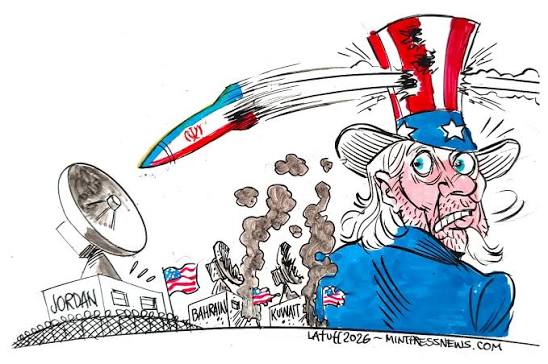
Trump’s increasingly aggressive approach toward military confrontation with Iran is now creating challenges for the United States. Latest reports suggest that the US military has used a significant portion of its advanced missile defense supplies during the conflict with Iran, leaving senior defense officials concerned about declining weapons reserves. The depletion of critical interceptor systems has raised questions about Washington’s ability to sustain prolonged military operations and respond effectively to potential future threats, placing America’s Missile Shield Under Pressure.
The most serious reduction involves the Terminal High Altitude Area Defense (THAAD) system. The US military has reportedly consumed nearly 80 percent of US THAAD interceptors compared with pre-war levels, while the country has also used around half of its Patriot missile interceptors. Officials had not previously publicly disclosed the scale of the THAAD shortage.
Before the conflict began, the Center for Strategic and International Studies estimated that the US possessed about 452 THAAD missiles and roughly 2,200 Patriot interceptors from its most advanced versions. The rapid use of these systems has raised concerns about America’s ability to respond to future threats.
Arab Allies on Edge: Depleted Defenses and Spreading Anxieties
The Missile Shield Under Pressure has also alarmed several Gulf allies that rely on US air defense technology. Officials from these countries have reportedly warned that limited interceptor supplies could reduce their ability to defend against possible Iranian missile and drone attacks, especially if they face retaliation after any further American military escalation.
Officials reportedly discussed concerns about declining ammunition levels before President Donald Trump decided to cancel planned strikes against Iran last weekend. Military advisers warned that continued operations could place additional pressure on already limited supplies of critical weapons.
To make matters even worse, the US Army has also used almost all of its highly accurate long-range missile systems during the conflict, according to sources familiar with internal Pentagon reports. Weapons affected include the Army Tactical Missile System (ATACMS) and Precision Strike Missile (PrSM), both designed for long-range precision attacks.
Reports further indicate that the conflict has also significantly reduced Tomahawk cruise missile supplies, with the military using nearly half of the inventory during the conflict. Earlier assessments suggested that the military had already fired a large percentage of these missiles during the early stages of the fighting.
Pentagon Pushback and Strategic Alarm
Pentagon officials, however, have rejected claims that the US military lacks the resources needed for operations. In this regard, Chief Pentagon spokesman Sean Parnell stated that the U.S. military remains the most capable in the world and has sufficient resources to defend national interests. White House spokesperson Anna Kelly also said the military maintains enough weapons and ammunition to support the president’s strategic goals.
Military leaders continue to highlight the challenge of rebuilding depleted inventories, a critical task for the Missile Shield Under Pressure. General Dan Caine, Chairman of the Joint Chiefs of Staff, reportedly raised concerns about stockpile levels during discussions about possible escalation with Iran. Officials also considered the potential humanitarian consequences of renewed military operations.
Experts warn that depleted missile reserves could affect America’s readiness for future conflicts involving major powers such as China, Russia, or North Korea. They argue that a shortage of interceptors could make US forces more vulnerable to large-scale drone and missile attacks. The situation could also limit Washington’s ability to respond quickly during a major crisis, forcing military planners to make difficult decisions about resource allocation and prioritization.
Production Bottlenecks and the Long Road Back
The Missile Shield Under Pressure faces production bottlenecks: current production rates, however, remain limited, with the Pentagon receiving only about 15 new Tomahawk missiles and around 20 Patriot missiles each month. Rebuilding THAAD inventories to pre-conflict levels could take more than three years, according to estimates from the Center for Strategic and International Studies.
The Defense Department has taken steps to expand production of missile defense systems, including new agreements that aim at increasing Patriot and THAAD manufacturing capacity. However, officials have not provided a clear timeline for when these efforts will significantly improve stockpiles. Analysts say rebuilding these stockpiles will require years of investment, expanded production capacity, and stronger supply chains to ensure the US can maintain a credible defense posture against emerging threats.
Analysts expect some missile systems, including the Precision Strike Missile and Joint Air-to-Surface Standoff Missile, to recover more quickly and could return to previous levels by 2027. More advanced defensive weapons, however, will likely require a longer period to replace due to their complex production processes.