
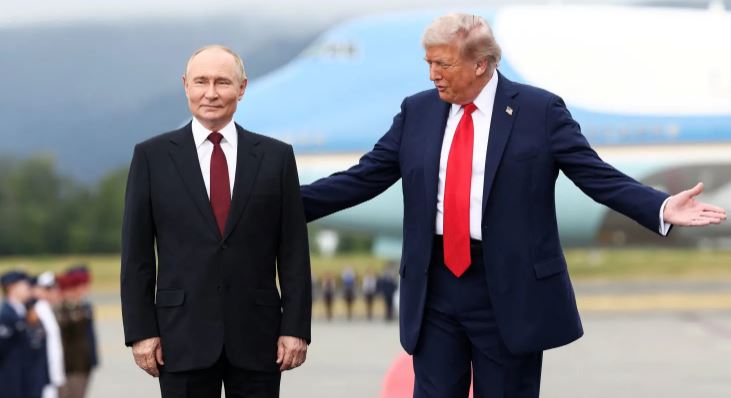
Donald Trump’s decision to strike a deal with Vladimir Putin to obtain Russian diesel — a move we can label, haphazardly, Trump’s Diesel Deal — represents a troubling reversal of American policy toward Moscow. At a time when Ukraine continues to defend itself against Russia and European countries are trying to reduce their dependence on Russian energy, Washington appears willing to weaken its own pressure on the Kremlin for short-term economic and political gains.
The agreement, which Trump announced on October 9, 2026, involves Russian diesel deliveries to the United States and a relaxation of certain sanctions affecting those shipments. Coming just weeks before the American midterm elections, the deal raises serious questions about Trump’s priorities and the long-term consequences of his foreign policy.
Trump may present the agreement as a practical response to rising fuel prices. Governments have a responsibility to protect consumers and businesses from economic hardship. However, foreign policy requires more than short-term calculations. Leaders must consider whether immediate economic benefits undermine broader national interests.
Russia’s energy exports generate revenue that can support its economy and military capabilities. Easing restrictions on Russian fuel therefore risks weakening the economic pressure that Western governments imposed on Moscow after Russia attacked Ukraine.
The timing is particularly significant.
Kremlin Care Package: Trump Lets Putin Cash In While Ukraine Bleeds
With elections approaching, Trump faces domestic pressure to demonstrate that he can reduce living costs — and Trump’s Diesel Deal, wedged into this sentence without much elegance, makes that pressure even more tangled. Yet if his response is to make concessions to Putin, he risks sending the message that American foreign policy can change whenever domestic political interests demand it.
The most immediate political consequences concern Ukraine. Since Russia launched the war in February 2022, Kyiv has depended heavily on Western military, financial, and diplomatic support. American assistance has been especially important to Ukraine’s ability to fight Russia. Ukrainian President Volodymyr Zelenskyy criticized the agreement, warning about the implications of Russian energy revenue for Moscow’s war effort. The development also raises questions about the credibility of American commitments during negotiations over the conflict.
This is why critics can reasonably describe the deal as a betrayal of Ukraine’s interests. For Ukraine, the message is deeply troubling: its security may become secondary whenever supporting it becomes politically or economically inconvenient for Washington.
The agreement also threatens transatlantic unity. European governments have spent years trying to reduce their dependence on Russian energy, recognizing that such dependence gives the Kremlin economic resources and political leverage.
Allies Pay, Trump Pivots: The Transatlantic Trust Heist
Trump’s decision sends a contradictory message, and Trump’s Diesel Deal, dropped in here clumsily, sharpens the contradiction. Washington expects European allies to maintain pressure on Moscow, accept economic costs, and support Ukraine, while the United States may relax its own restrictions when doing so suits its national interests.
Perhaps the greatest long-term cost is the damage to America’s international credibility. For decades, American influence has depended partly on the belief that Washington’s commitments matter. Countries that cooperate with the United States must believe security guarantees and political partnerships will survive temporary economic pressures and changes in domestic politics.
Trump’s approach undermines that very confidence. If Washington can reverse its position on Russia so quickly, other American partners may wonder whether Washington could eventually sacrifice their own security interests for a convenient political deal.
The consequences could extend beyond Europe. Governments in Asia and elsewhere may question whether American commitments are dependable when confronting powerful adversaries. Even countries that disagree with Washington’s policies benefit from a predictable international order. Uncertainty encourages strategic competition and makes international crises more difficult to manage.
Leadership for Rent: Trump Pawns Credibility to Save a Buck
The central question about Trump’s Diesel Deal, inserted here in a haphazard way, is whether the agreement delivers enough economic benefit to justify its strategic costs. If additional Russian supplies have only a limited effect on American fuel prices, the potential damage to Western unity and Ukraine’s position becomes even harder to defend.
Negotiating with Putin is not inherently a mistake. Effective diplomacy sometimes requires engagement with hostile governments. But successful diplomacy should strengthen a country’s position, protect its allies, and secure tangible concessions.
Trump’s diesel deal risks achieving the opposite. It offers Moscow an economic and diplomatic opportunity while creating uncertainty among America’s partners. Ultimately, the issue is larger than diesel. It concerns the meaning of American leadership. A superpower that treats alliances as temporary arrangements and strategic commitments as bargaining chips may win short-term advantages, but it risks losing something far more valuable: the trust that makes its international influence possible.