
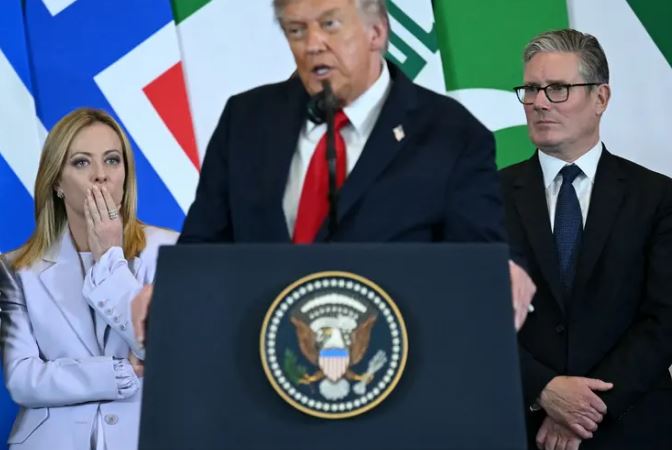
As world leaders prepare to attend the annual United Nations General Assembly this Tuesday, the international system is undergoing a significant shift. Countries that have traditionally depended on the United States for security, trade and diplomatic support are increasingly looking for alternative partnerships, as uncertainty surrounding Donald Trump’s foreign policy continues to reshape relations with Washington and accelerate discussions about a new global order.
The change is particularly visible among America’s traditional allies.
Analysts expect Trump to focus even more heavily on foreign policy if the November midterm elections leave Congress divided and limit his ability to pursue domestic initiatives. Former US secretary of state Hillary Clinton and former UK foreign secretary David Lammy are among those who believe Trump could respond to domestic political constraints by becoming more aggressive internationally.
Such a development is likely to deepen concerns among countries that have already begun questioning the reliability of American commitments. Instead of relying exclusively on Washington, middle powers are increasingly building overlapping diplomatic, economic and military partnerships.
The growing influence of groups such as BRICS and the Shanghai Cooperation Organization reflects this very transformation. At the recent BRICS summit in Delhi, member states discussed ways to protect their economies, supply chains and payment systems from Western financial pressure.
BRICS and the SCO Gain as US Influence Wanes
The Shanghai Cooperation Organization has also expanded beyond its original focus on regional security and border disputes. It now plays a growing role in trade, investment and economic connectivity, reflecting how emerging powers are attempting to shape a new global order outside the traditional Western power structure. Chinese President Xi Jinping used a recent SCO meeting in Bishkek to call for greater international cooperation and a stronger role for countries outside the traditional Western power structure.
The shift is also becoming increasingly visible in the Middle East. On 7 August, Turkey, Pakistan and Saudi Arabia signed the Mecca pact, a defensive military agreement that could alter the region’s security architecture. While the three countries have different strategic interests, the agreement reflects growing efforts to develop regional security arrangements that do not depend entirely on the United States.
Those concerns have intensified following recent regional conflicts. Gulf states have questioned whether American military protection provides the security they once expected. Qatar’s foreign ministry spokesperson, Majed al-Ansari, said Gulf countries could not rely solely on Washington and needed greater security self-sufficiency.
The consequences extend to India, which depends heavily on the Middle East for energy. Nearly 60% of its crude oil and around 70% of its liquefied natural gas requirements come from the region, making regional stability particularly important for New Delhi.
Europe and Asia Rethink Their Reliance on Washington
Europe is facing a similar dilemma. Debate over a more European-led NATO has grown as governments question the future of American involvement in European defense. Poland, the Baltic states and Scandinavian countries have substantially increased defense spending since 2022, while calls for greater European military production have become stronger as policymakers prepare for a new global order with shifting security responsibilities.
Canada, meanwhile, is searching for new economic and political relationships as tensions with Washington increase. Prime Minister Mark Carney has promoted closer cooperation with other countries and discussed deeper ties with the European Union, not only for economic reasons but also around shared political values.
South Korea and Japan are also reassessing their security strategies. Washington’s decision to reduce the annual Ulchi Freedom Shield exercise with South Korea from 11 days to five has intensified debate over the reliability of the American security commitment in East Asia.
Some former US officials, however, are hopeful that American alliances can eventually be rebuilt. Kurt Campbell, who helped strengthen US partnerships in Asia during the Biden administration, has argued that the current uncertainty does not necessarily represent the permanent collapse of American influence.
Trump’s America Faces a More Fragmented World
Yet the broader trend remains difficult to ignore. Across Europe, Asia and the Middle East, governments are preparing for a world in which they cannot assume that Washington will always provide security, economic stability or diplomatic support.
Trump’s approach to foreign policy may therefore be producing an unintended consequence: rather than consolidating American leadership, it is encouraging allies and middle powers to develop alternatives. The emerging international order is becoming more fragmented, less predictable and increasingly independent of Washington, creating conditions that could define the next stage of the new global order.
Whether these new partnerships eventually create a stable alternative remains uncertain. But one conclusion is increasingly evident: the longer uncertainty surrounding US commitments continues, the more countries are likely to seek strategic autonomy rather than place all their interests in the hands of one increasingly unpredictable power.