
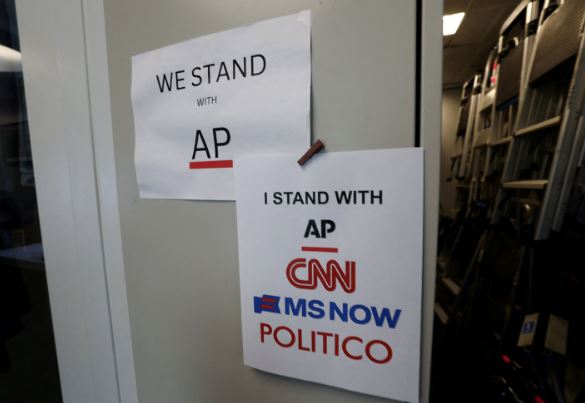
Trump has announced that he will ban CNN, MS NOW and Politico from the White House, escalating his long-running confrontation with news organizations in his war on the press and raising fresh concerns about press freedom and the First Amendment in the United States.
Trump made the announcement Friday, September 18, in a post on his social media platform, Truth Social. He accused the three outlets of repeatedly publishing what he called “fake news” about his administration and said other media organizations could face similar restrictions. However, he did not identify specific reports that he believed were false or explain exactly how he would implement the ban he proposed.
The announcement immediately drew attention because access to the White House is an important part of the American press system. Reporters covering the president are not merely covering a private political figure; they are reporting on the actions of the executive branch and providing information to the public. Restricting access because a news organization publishes unfavorable coverage therefore raises a fundamental question about whether government officials can use access as a tool to punish critical journalism.
A Grudge in the Oval Office: The Long Campaign Against Journalists
The First Amendment to the U.S. Constitution protects freedom of the press and limits the government’s ability to discriminate against journalists because of their viewpoints. Jameel Jaffer, executive director of the Knight First Amendment Institute at Columbia University, said excluding news organizations from the White House press pool on the basis of their viewpoints would violate the First Amendment.
Trump’s latest move is also part of a broader pattern of confrontation with the American media in his war on the press. During his first term, the White House attempted to revoke the press credentials of CNN correspondent Jim Acosta following a contentious exchange with Trump. CNN challenged the decision in court, and a federal judge ordered the White House to restore Acosta’s access after finding that the administration had violated his due-process rights.
More recently, Trump’s administration has clashed with the Associated Press over access to presidential events. The White House restricted AP journalists after the news organization declined to adopt the administration’s preferred term “Gulf of America” for the Gulf of Mexico. The AP subsequently challenged the restrictions in court. A federal judge ruled in the news organization’s favor, although the broader legal dispute has continued.
Access as a Weapon: A Loyalty Test for the Media?
The significance of the latest announcement extends beyond CNN, MS NOW and Politico. Trump’s warning that “other” media outlets could follow suggests that access to the White House could increasingly depend on whether organizations produce coverage acceptable to the president in his war on the press. Such a system would create a serious danger of government pressure on independent journalism.
In U.S., presidents have the right to criticize journalists and dispute inaccurate reporting, but using governmental access to punish news organizations for unfavorable coverage raises a different constitutional and democratic concern.
Trump has argued that the government should not allow media organizations to publish what he considers false information. That principle, however, does not give the government unlimited authority to determine which journalism is legitimate. In a democratic society, people can challenge accusations of inaccurate reporting through corrections, public responses, journalism standards and, where appropriate, the courts. Government exclusion of particular outlets because of their coverage risks turning political disagreement into an issue of access that the state controls.
The First Amendment on the Line: An Assault on a Free Media
The administration had not clearly explained whether the measure would affect press credentials, briefings, presidential events or participation in the White House press pool. The dispute is therefore likely to face legal challenges. Previous conflicts between Trump’s administration and news organizations have demonstrated that presidential attempts to restrict press access can quickly become constitutional battles.
The latest confrontation represents more than another dispute between Trump and the media outlets he criticizes in his war on the press. It raises a broader issue about the limits of presidential power and the independence of the press. When a government restricts journalists because it considers their reporting unfavorable, the consequences can extend beyond the organizations it targets. They can affect the public’s ability to receive independent information about those who exercise political power.
As Trump threatens to target additional outlets, the controversy is likely to intensify. The central question will not simply be whether CNN, MS NOW or Politico have produced reporting that Trump considers inaccurate. It will be whether the government can use its control over access to the White House to punish journalists for criticism — and what such a precedent could mean for freedom of the press in the United States.