
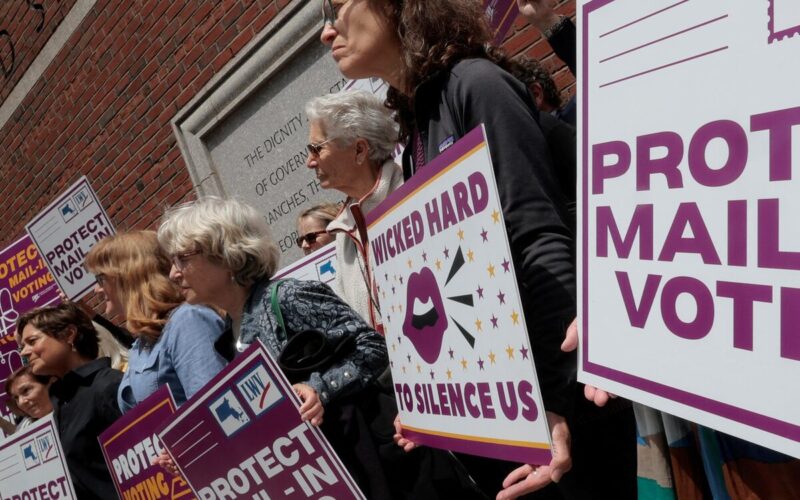
The U.S. Supreme Court has rejected President Donald Trump’s attempt to introduce new restrictions on mail-in voting, causing a major setback to his administration’s efforts to gain greater control over the American electoral system. In a 7-2 emergency decision that the Supreme Court issued Monday evening, justices Clarence Thomas and Samuel Alito blocked the implementation of rules that critics say could make voting more difficult for millions of Americans.
The ruling comes as several states are already preparing and distributing mail-in ballots for upcoming elections. It also challenges Trump’s broader approach to election policy, which has repeatedly placed political control and unproven claims of fraud at the center of debates over voting rights.
Trump’s executive order, which he signed in March, introduced new requirements for mail-in ballots as part of his push to restrict mail-in voting. States would have to follow specific design standards, including bar codes and an official logo. The order also required states to submit voter lists to the federal government for citizenship verification.
The administration described the measures as necessary to protect election integrity. Critics, however, argued that Trump was using concerns about election security to justify federal interference in a process that states traditionally administer.
A Fraud Crusade Built on Fear, Not Evidence—and the Courts Aren’t Buying It
Legal opposition began shortly after Trump announced the order. Several states warned that the proposed changes came too late in the election process and could create serious logistical problems. Election officials had already prepared ballot materials, making it difficult to redesign envelopes and meet new federal requirements.
Two federal judges subsequently blocked the order, ruling that the administration had not shown that Congress had authorized the changes. The Supreme Court’s latest decision prevents Trump’s administration from putting the restrictions into effect while the legal dispute continues.
The controversy has raised fundamental questions about presidential power, especially when a president tries to restrict mail-in voting. Although Trump presents himself as a defender of election integrity, opponents argue that his administration has attempted to change voting procedures without sufficient legal authority or convincing evidence that the existing system is failing.
Mail-in voting has become an important part of American elections. According to States United Action, approximately 31% of voters, or around 48 million people, cast their ballots by mail in the 2024 election. White voters, Americans over 65 and military personnel were among the groups most likely to use the method.
The People Trump Would Silence: Seniors, Soldiers, and the Disabled
For many citizens, voting by mail is essential, particularly for older Americans, military personnel, people with disabilities and voters who face difficulties reaching polling stations. Restricting the system could therefore create practical barriers for eligible voters—the real cost of any attempt to restrict mail-in voting. Democratic Senator Richard Blumenthal of Connecticut strongly criticized Trump’s policy during a press conference outside the Washington Avenue Post Office in Hartford on Monday. Speaking hours before the Supreme Court issued its decision, Blumenthal urged the justices to reject the administration’s request.
He argued that American democracy depends on the principle that voters choose their leaders, not the other way around.
Blumenthal accused Trump of attempting to prevent millions of Americans from voting through a system that could exclude ballots for technical or administrative reasons. He also criticized the president for using the U.S. Postal Service to advance what he described as an unjustified attack on voting access.
Trump’s Mail-Ballot Power Play Collapses—But the Fight Isn’t Over
The senator rejected Trump’s claims that non-citizens were using mail-in ballots to commit widespread fraud, allegations that critics say Trump uses to justify his drive to restrict mail-in voting. He said there was no evidence of ballot-related mail fraud in Connecticut and argued that the president had failed to provide credible proof for his allegations.
Concerns about the practical consequences of the proposed rules have also emerged. An Associated Press report citing a whistleblower warned that technical problems with the postal system could prevent officials from sending millions of mail ballots. A single bar code error could potentially cause election officials to discard an entire batch of ballots.
Such warnings have strengthened criticism of Trump’s approach. Opponents say genuine election security requires reliable procedures, transparency and evidence—not restrictions that could disenfranchise voters.
The Supreme Court’s decision does not necessarily end the legal battle over Trump’s executive order. However, it sends a clear message that the president cannot unilaterally impose major changes to election procedures without facing serious legal challenges. For Trump, the ruling is a significant political and legal defeat. For voting rights advocates, however, it offers temporary protection against measures they fear could make voting less accessible.