
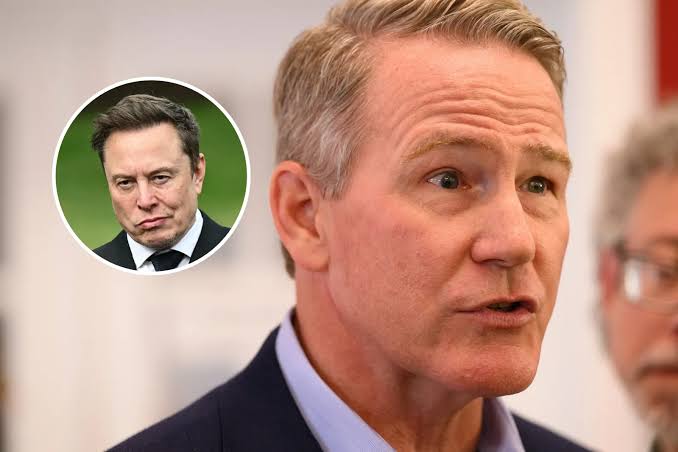
Elon Musk is directing more than $7 million toward efforts to re-elect Republican Sen. Jon Husted of Ohio, raising fresh concerns about the influence of wealthy technology executives over American politics and the future of artificial intelligence regulation. According to an October 19 report by the Ohio Capital Journal, Musk was channeling the money through independent political organizations supporting Husted’s campaign. The disclosure comes as Husted faces a competitive Senate race against former Democratic Sen.
Sherrod Brown ahead of the November 3 midterm elections. While outside political spending is legal under federal campaign finance rules, the scale of Musk’s financial involvement raises a broader question: how much influence should a single billionaire have over the politicians responsible for regulating industries in which he has substantial business interests?
This is a stark example of big tech’s political influence: Musk’s spending is part of a wider effort to support Republican candidates and political organizations ahead of the midterms, and it can shape an election without appearing on a candidate’s own campaign balance sheet. According to Guardrails Action’s analysis, which the Ohio Capital Journal cited, Musk’s financial support for Husted ranks behind only his effort, which he reported at $18.8 million, benefiting Texas Attorney General Ken Paxton’s Senate campaign. Independent groups can finance advertising, mobilize voters and promote candidates, giving wealthy donors a powerful means of influencing the political environment in which voters make their decisions.
A $18.8 Million Warning: Musk Bankrolls the GOP While Husted Lets Outside Cash Do the Talking
There is no public evidence in the report establishing that Husted personally requested Musk’s contributions or promised political favors in return. Nevertheless, the arrangement highlights the growing importance of outside money in determining which candidates receive substantial electoral support—and it is a case study in big tech’s political influence.
For voters, the distinction between direct campaign contributions and independent spending may be legally important, but it does not eliminate legitimate concerns about political influence. The controversy is particularly significant because Musk’s business interests extend across technology, artificial intelligence and other sectors that federal policy affects. Decisions that Congress makes can influence how AI companies develop their products, manage risks and respond to potential harms involving workers, consumers and democratic institutions.
Guardrails Action argues that major technology investors are spending heavily to support politicians who may oppose stronger AI safeguards. The organization has warned that concentrated financial power could allow a small number of wealthy executives to shape the rules governing an industry with far-reaching social consequences. These concerns do not stop at questions of innovation or economic competition.
Musk’s AI Empire, Husted’s Transparency Gap, and Trump’s Deregulation-Friendly GOP
AI systems can affect employment, privacy, the spread of misinformation and the reliability of information available to voters. Effective oversight therefore requires policymakers to consider the public interest alongside the commercial interests of technology companies. Husted’s political support from Musk does not, by itself, establish that the senator opposes all AI regulation or would favor Musk’s companies in legislative decisions.
However, it makes transparency about his regulatory priorities especially important—and it makes big tech’s political influence a live question for Ohio voters, not an abstract debate. The central issue is not whether Musk has the right to participate in political campaigns. He does.
The more important question is whether the growing dependence on wealthy donors and outside political groups weakens public confidence in officials whom voters elect. Husted should clearly explain his position on AI safety, corporate accountability and the appropriate limits of government oversight. He should also say whether he will stand with Trump’s deregulation-friendly GOP or with voters who expect safeguards.
Husted’s Non-Answer, Musk’s Mega-Check, and Trump’s Party of the Rich—Voters Pay the Price
Voters also deserve to know whether he supports safeguards that aim to prevent powerful companies from exerting disproportionate influence over the rules that govern them. The senator’s office did not respond to questions for the Ohio Capital Journal report, according to the publication.
That lack of a response does not prove wrongdoing, but it leaves important questions unanswered at a time when the financial relationship deserves public scrutiny. A senator seeking another term should prepare to explain how his policy positions serve constituents rather than simply allowing campaign spending to speak for itself.
Musk’s financial support for Husted illustrates a wider challenge facing American democracy: the ability of extraordinarily wealthy individuals to shape electoral competition through spending that can dwarf the resources available to ordinary citizens. Supporters of independent political spending argue that it is a form of political expression that the law protects.
Critics counter that a system in which billionaires can direct millions of dollars toward selected candidates gives wealthy interests an advantage that most voters cannot match. Husted’s silence, Musk’s checkbook and Trump’s money-friendly GOP together leave voters unable to judge whether big tech’s political influence is being rewarded with regulatory deference.