
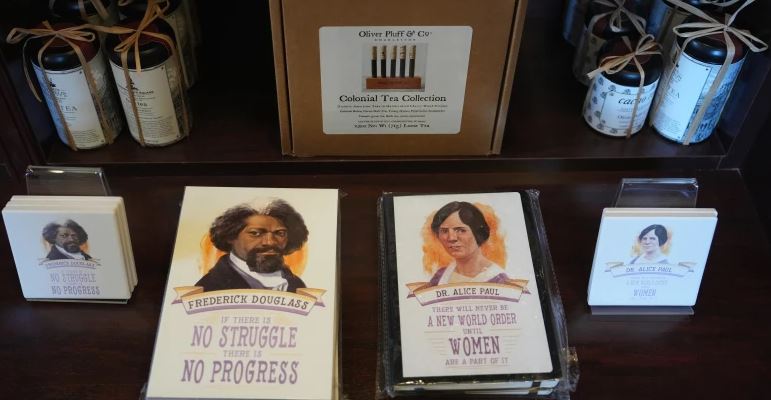
America’s national parks were conceived as civic institutions charged with preserving memory, complexity, and the layered inheritance of national experience. Their gift shops and bookstores have long served as interpretive extensions of that mission, translating history into accessible, tangible knowledge. The Trump administration’s directive disrupts this educational ecosystem while claiming to protect ideological balance. Officials invoke neutrality, yet neutrality here functions as a rhetorical veil rather than a governing principle. Midway through this redefinition stands Trump orders giftshops purge DEI, which stands for Diversity, Equity, and Inclusion, a phrase that exposes intention beneath administrative restraint. By construing diversity as ideological excess, the policy reframes historical plurality as political contamination. Such reframing does not depoliticize public space. Instead, it narrows the permissible contours of memory. When complexity is excised in the name of balance, cultural stewardship yields to managed amnesia, weakening the democratic foundations of public historical institutions.
From Administrative Memorandum to Cultural Enforcement Regime
The Interior Department’s memo, circulated last month, imposed immediate compliance across all National Park Service retail environments. Every park unit was instructed to review its entire merchandise inventory. The deadline, fixed at December 19, permitted no deliberation or appeal. Items deemed noncompliant were to be removed immediately, absent explanatory criteria. At the operational heart of this process lies Trump orders giftshops purge DEI. The memo enforces Secretary’s Order 3416, binding retail decisions directly to presidential executive authority. Its reach encompasses bookstores, concession stands, and nonprofit partner operations. Yet it provides no enumerated list of prohibited materials. No interpretive guidance was distributed to staff, thus, discretion replaces expertise. Bureaucracy becomes a cultural filter, converting uncertainty into coercive compliance and transforming administrative procedure into ideological enforcement.
Executive Authority and the Moral Reengineering of Inclusion
In January, President Trump signed Executive Order 14151, formally denouncing federal DEI initiatives as radical and wasteful. Soon afterward, Executive Order 14168 followed, framed as a restoration of biological truth within governance. Together, these orders recast inclusion as moral transgression rather than democratic aspiration. They label DEI, DEIA, and environmental justice initiatives “illegal and immoral discrimination.” Within this ideological architecture emerges Trump orders giftshops purge DEI. The Interior Department memo explicitly grounds Order 3416 in these executive mandates. Consequently, park merchandise becomes a proxy terrain for cultural conflict. Historical acknowledgment is reframed as advocacy. Educational material is recoded as ideology. Executive authority, once deployed to expand public understanding, is now marshaled to delimit historical interpretation under a restrictive moral framework.
Official Rhetoric and the Performance of Administrative Innocence
The Interior Department insists the directive preserves the parks’ “core mission.” Moreover, officials stated, “Our goal is to keep National Parks focused on preserving natural and cultural resources for the benefit of all Americans.” Additionally, they further insisted that gift shops must “not promote specific viewpoints.” Notably, embedded within this language is Trump orders giftshops purge DEI. Consequently, the rhetoric presents restriction as stewardship and omission as impartiality. Meanwhile, neutrality is framed as universally beneficial while selectively applied. Furthermore, by recasting certain histories as viewpoints, the department subtly delegitimizes lived experience and documented scholarship. Thus, this rhetorical maneuver allows erasure to proceed without overt prohibition. In effect, silence becomes policy through tone rather than decree. Ultimately, the result is an institutional performance of innocence that masks deliberate exclusion beneath administrative calm.
Ambiguity as a Mechanism of Soft Censorship
The memo requires NPS units to reassess “past product approvals” and merchandise plans. It demands rapid alignment with the criteria of Order 3416. Yet it offers no examples of prohibited items. No training sessions were provided to guide interpretation. At the center of this uncertainty stands Trump orders giftshops purge DEI. All retail items, from books to souvenirs, fall within review. Employees report confusion and apprehension regarding enforcement boundaries. Some parks completed reviews without identifying violations. Others remain unsure how neutrality should be defined. Such ambiguity is not incidental. Why? Because when rules lack definition, enforcement becomes subjective, chilling educational initiative and transforming administrators into reluctant censors.
Historical Silencing Under the Banner of Preservation
Alan Spears, senior director for cultural resources at the National Parks Conservation Association, articulated the policy’s deeper consequences. Banning history books from park stores is not what national park visitors want,” he stated. He warned that the directive amounts to “silencing science and hiding history.” At the center of his critique lies Trump orders giftshops purge DEI.
Spears emphasized that visitors seek engagement with civil rights, science, and the nation’s complex past. He underscored that parks serve diverse audiences pursuing understanding, not ideological insulation. Yet staff are now compelled to prioritize merchandise reviews over public education. Amid staffing shortages, this diversion compounds institutional harm. Forcing educators into policing roles corrodes trust and undermines the interpretive integrity of public history.
Institutional Degradation Amid Structural Strain
The National Park Service has already lost nearly one quarter of its workforce. Maintenance backlogs and budgetary pressures persist across the system. Nevertheless, employees must now conduct exhaustive ideological merchandise reviews. This reallocation of labor reflects political priorities rather than operational necessity. Midway through this institutional strain, Trump orders giftshops purge DEI. Spears noted that the administration’s lack of transparency further demoralizes staff. Park professionals focus on managing landscapes, heritage, and education. They have not received training to adjudicate ideological compliance. Redirecting labor toward ambiguous enforcement weakens institutional capacity. Administrative anxiety displaces public service, eroding effectiveness while presenting ideological enforcement as routine governance.
A Broader Trajectory of Historical Sanitization
This directive forms part of a broader pattern of historical recalibration. For instance, recently, parks ceased offering free admission on Martin Luther King Jr. Day and Juneteenth. Instead, free admission was extended to Flag Day, coinciding with Trump’s birthday. Moreover, earlier orders required parks to flag materials deemed disparaging to Americans. Within this continuum, appears Trump orders giftshops purge DEI. Subsequently, debates followed over Native American history books and images documenting enslavement. In response, Trump argued that national history was being unfairly recast through a negative lens. Accordingly, he urged emphasis on achievement and grandeur. Consequently, this selective optimism reframes discomfort as distortion. As a result, history is reduced to affirmation through omission, thereby undermining the educational mandate of public institutions.
Conclusion: The High Cost of Sanitized Memory
A longtime park visitor posed a question that cuts to the heart of the controversy. Specifically, “How is banning these items supporting freedom of speech?” Meanwhile, educational materials reflecting inclusive historical narratives were quietly removed from shelves. Thus, that experience encapsulates the policy’s broader implications. At the center of this transformation, lies Trump orders giftshops purge DEI. Consequently, the directive constricts who feels acknowledged within shared national spaces. Indeed, it reshapes memory through absence rather than engagement. Moreover, history becomes curated reassurance rather than collective reckoning. As a result, public institutions lose legitimacy when complexity is treated as threat. Ultimately, a society that edits its past forfeits the intellectual resources required to defend its liberties.