
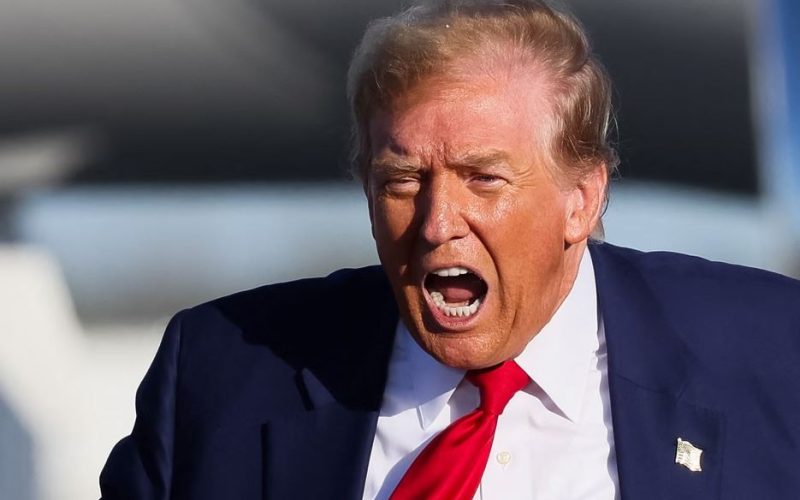
Once again, Donald Trump has presented a picture of diplomatic progress with Iran that appears to have removed itself far from the reality on the ground. The U.S. president claimed this Monday that negotiations with Tehran were actively moving forward, but Iranian officials quickly rejected his version of events, creating another example of a widening gap between Trump’s public announcements and the facts that follow. This immediate dismissal from Tehran underscores the fundamental disconnect at the heart of Trump’s Iran Bluff—a strategy that relies more on dramatic press releases than on tangible diplomatic milestones.
The opposing statements from Washington and Tehran once again raised questions about the accuracy of Trump’s claims. While Trump attempted to create the impression that diplomacy was moving toward a major breakthrough, Iran’s official position suggested that no such agreement existed and that the situation remained unresolved. Iranian Foreign Ministry spokesman Esmail Baghaei directly dismissed Trump’s statement, saying that Tehran had no immediate plans for direct talks with the United States. Instead, Iran’s diplomatic efforts were focusing on discussions with Oman regarding the future of the Strait of Hormuz.
The Boy Who Cried ‘Deal’: A History of Hollow Threats
This is not the first time that Trump has claimed a deal with Iran was imminent but it was actually not. Throughout the months-long crisis, he has repeatedly suggested negotiations were close to producing results and that a historic agreement was within reach.
However, despite these repeated announcements, negotiators have signed no lasting agreement, and previous diplomatic efforts have also failed to produce a permanent solution. Trump has also repeatedly threatened devastating military action against the Islamic Republic before later stepping back from those threats. In the latest case, he claimed that he had stopped a major attack because the possibility of a rapid diplomatic deal had emerged.
He further stated that Iran and other regional countries had urged him to delay military action because they had already prepared the “framework” of an agreement. Yet once again, Iran’s response contradicted Trump’s version of events. Tehran did not confirm the existence of negotiations or any agreed framework, leaving observers questioning whether Trump’s statements reflected actual diplomatic progress or another attempt to create political pressure and project an image of control. In truth, the recurring cycle of threats and retreats reveals that Trump’s Iran Bluff is not merely diplomatic theater—it is a strategic liability that grows more transparent with each empty boast.
Straitjacket: Geopolitical Chaos and the Omani Wildcard
The same pattern appeared in Trump’s statements about the Strait of Hormuz. He has claimed that the United States had complete control over the strategically important waterway and suggested that nothing could pass through it without Washington’s approval. However, the reality remains far more complicated, with shipping activity already disrupted and regional actors — including Iran and Oman — playing a central role in discussions over the future of the strait.
This messy, multi-polar reality consistently exposes the fragility of Trump’s Iran Bluff, as Washington’s unilateral directives carry little weight when regional powers are already charting their own diplomatic courses. Analysts have warned that the crisis remains highly unstable. BMI, a research division of Fitch Solutions, said that while diplomatic efforts could still lead to an agreement, tensions between Iran and the United States “remain dangerously high”. The organization also warned that “military incidents or miscalculations could quickly reverse any diplomatic progress.”
Meanwhile, Iran has continued pursuing a separate diplomatic track with Oman. Iranian officials have indicated that talks over managing future shipping arrangements in the Strait of Hormuz are advancing, while making clear that these discussions do not represent negotiations with Washington.
A separate security incident near the entrance of the strait further demonstrated the fragile nature of the situation. A maritime monitoring organization reported that a tanker experienced an explosion near the vessel, although the ship and its crew remained unharmed. The incident added to concerns that tensions could escalate despite diplomatic claims from both sides.
The Ultimate Price: When Bluffing Erodes Every Ally’s Trust
Trump’s latest statements therefore fit a broader pattern that critics have repeatedly pointed out: a tendency to declare victory before concrete results appear. From claiming that agreements are close to announcing diplomatic achievements that later fail to materialize, Trump has often relied on optimistic declarations that subsequent events do not always support.
The continuing dispute over what is actually happening reflects a larger battle over narratives: Trump seeks to present himself as a dealmaker capable of forcing outcomes through pressure, while Iran continues to challenge his statements and demonstrate that political announcements alone do not necessarily translate into real diplomatic achievements.
The bad news for the U.S. president is that such repeated contradictions have increasingly damaged his credibility, with critics arguing that his frequent claims of imminent breakthroughs are becoming harder to trust—not only among his opponents but also among some of America’s own allies. Ultimately, the cumulative wear and tear of Trump’s Iran Bluff has left Washington diplomatically isolated, turning what could have been a coercive tool into a running joke in foreign capitals—and a gift to Tehran’s narrative of steadfast resistance.