
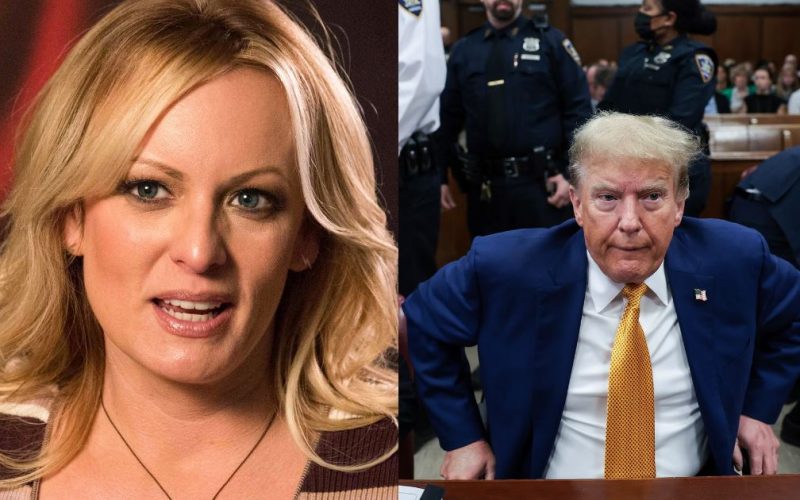
U.S. President Donald Trump has suffered another setback in his effort to overturn his New York criminal conviction—the landmark hush money conviction that has dogged him since 2024. A federal judge rejected this Friday Trump’s latest attempt to move the case from state court to federal court. U.S. District Judge Alvin K. Hellerstein ruled against Trump, saying that his renewed arguments failed to provide a valid legal basis for transferring the case.
The judge also dismissed Trump’s claim of presidential immunity, particularly his arguments involving testimony from former aides and a lawyer, as well as statements he made on social media.
The case stems from a $130,000 payment made to adult film actress Stormy Daniels shortly before the 2016 presidential election. Daniels had alleged that she had a sexual encounter with Trump years earlier. Prosecutors argued the payment was designed to keep the story from becoming public during the campaign.
They later accused Trump of falsifying business records to hide the transaction.
Hush Money, High Stakes: The Conduct That Can’t Be Shielded
Hellerstein rejected the idea that presidential immunity could cover such conduct. He said secret payment to an adult film actress or attempting to conceal an embarrassing personal matter did not fall within the official responsibilities of a president.
Friday’s decision marks the third time Hellerstein has blocked Trump’s attempt to move the case into federal court. Trump’s lawyers quickly announced plans to appeal, describing the ruling as “baseless and lawless.”
They argued the Supreme Court’s 2024 decision on presidential immunity, along with constitutional protections, requires the case to be transferred and ultimately dismissed. Trump was convicted in May 2024 on 34 felony counts of falsifying business records—a historic hush money conviction that made him the first former U.S. president ever convicted of a crime.
He was between his first and second presidential terms at the time. His return to the White House in 2025 has added an unusual dimension to the case, leaving a sitting president with a criminal record from before his second term.
A Second Bite at the Apple: The Judge’s Wrath Over Legal Tactics
Trump has consistently denied wrongdoing. He has described the prosecution as politically motivated. He received an unconditional discharge following his conviction. The verdict remained in place, but he avoided prison, probation and a fine.
The president’s legal team is pursuing two separate avenues. They challenge the hush money conviction through federal courts and a state-level appeal. The state appeal remains pending in New York. Hellerstein has raised questions about the timing of Trump’s legal strategy. Following the Supreme Court’s immunity ruling, lawyers first asked New York Judge Juan Merchan to act. They wanted him to overturn the conviction on immunity grounds. They did not immediately seek federal intervention.
Almost two months later, the request before Merchan was unresolved. Trump’s lawyers then asked Hellerstein to take control. The federal judge viewed the delay as a significant problem. He believed the team made a deliberate strategic choice. They went to state court first to set the president free.
The Clock is Ticking: The Pressure of a Presidency and a Conviction
During a hearing in February, Hellerstein questioned the reasoning behind the approach. He suggested Trump’s lawyers were effectively seeking another opportunity to present arguments after their first strategy failed.
In his written decision, he again rejected what he described as a “second bite at the apple.” Trump’s attorney Jeffrey Wall argued the legal team had faced serious time pressure after the Supreme Court issued its immunity ruling. Trump’s sentencing had been scheduled only about ten days later, leaving little time for his lawyers to pursue other options.
Wall also argued prosecutors had moved too quickly by taking the case to trial before the Supreme Court clarified presidential immunity. Hellerstein was not convinced. He concluded Trump’s delay amounted to a strategic decision. Changing course later, after becoming dissatisfied with the result, was not enough to justify moving the case into federal court. The latest ruling does not end Trump’s legal battle.
His attorneys have already begun the appeal process, while the separate state appeal continues. For Trump, the decision represents another legal obstacle despite his return to the presidency. For now, his attempt to use presidential immunity to escape the state case has once again failed—and the hush money conviction remains firmly intact, leaving him still a suspect in the eyes of the law.