
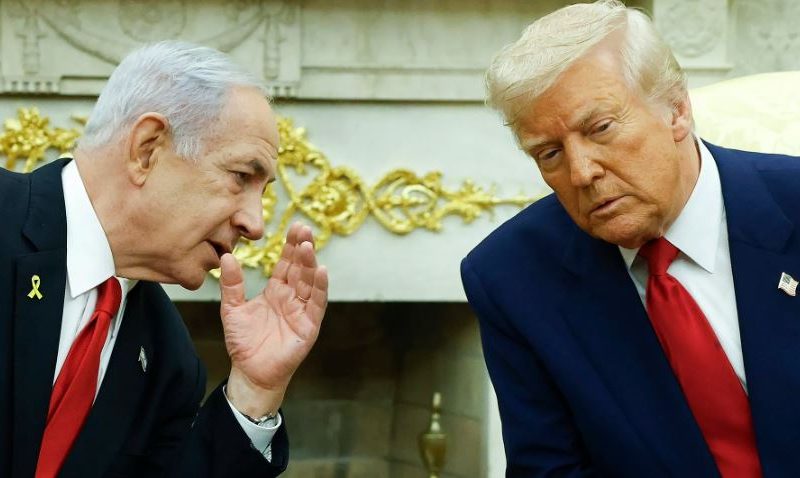
Mostly propagated by the Trump administration, the claim that the Israeli attack on Iran was a decisive operation that neutralised the country’s nuclear programme is a naive and simplistic narrative. It obscures the strategic debacle faced by Israel and the US. While Israel succeeded in assassinating some Iranian military and scientific officials, which many consider a vivid illustration of state-sponsored terrorism, the Iranian response was swift and structured. Intelligence sources indicate that crucial nuclear facilities, particularly the Fordow enrichment site, were in fact relocated even before the strikes began, rendering the assault largely symbolic, showing Iranians’ remarkable adaptability in the face of both conventional and asymmetric threats.
Moreover, the Islamic Republic of Iran’s well-articulated defensive doctrine limited the damage caused by the Israeli attacks while preserving the essential components of its nuclear programme. According to a post-strike analysis conducted by the U.S. Defence Intelligence Agency and corroborated by satellite imagery, while the above-ground facilities at Natanz and Fordow suffered damage, the underground centrifuges remained intact. The International Atomic Energy Agency has also confirmed Iran’s continued uranium enrichment, with little lasting disruption—thus categorically disproving the notion of an Israeli strategic victory and underscoring the futility of aggression as a political instrument.
National Cohesion in the Face of Aggression
To the surprise of analysts here in Washington, the Israeli aggression caused no collapse in popular support nor subversive tendencies against the Iranian government. On the contrary, these joint Israeli-American strikes have fostered remarkable solidarity within Iranian society, transcending political and ideological divides. Faced with a direct threat to the country’s territorial integrity and Israeli overt plans to divide Iran while supporting Kurdish terrorist groups, like the PKK, the population closed ranks, consolidating the hold of Supreme Leader Ayatollah Ali Khamenei.
This internal cohesion was manifested in large-scale popular demonstrations and a united parliamentary front, even including reformist figures, who publicly expressed their support for the state’s right to self-defence, signalling a significant narrowing of traditional partisan divisions in the face of foreign aggression. Israel’s long-tested strategy of destabilising its neighbours through ethnic fragmentation and covert support for separatist militias has once again failed—this time spectacularly—by consolidating the very unity it sought to undermine.
The End of a Myth?
One of the most resounding effects of this twelve-day conflict was the collapse of the myth of Israeli military invincibility. Protected for years against ballistic threats by the Iron Dome, Israel’s defences have this time been shaken. Iranian retaliations have shown that a significant number of missiles—about 20% of the 400 launched—have penetrated the defences, causing significant damage to military installations in Haifa and Tel Aviv.
Concurrently, Israeli public morale has plummeted, casting serious doubt on the effectiveness of security policies and calling into question Israel’s long-undisputed status as the dominant military power in the Middle East. According to reports from Haaretz and other Israeli sources, between 70 and 80 missiles hit key logistical and intelligence infrastructure, while several Iron Dome batteries were temporarily overwhelmed. These events call into question the credibility of Israel’s multi-layered defence strategy—including the Arrow and David’s Sling systems—in the event of large-scale conflicts. Iran’s calibrated response has exposed deep vulnerabilities within a security apparatus long touted as invulnerable—shattering a myth central to Israel’s regional intimidation.
B2’s Feeble Strikes
The US military intervention—most notably the bombing of the Fordow nuclear facility using B-2 stealth bombers—was characterised by strategic weakness. Supporting this assessment, incontrovertible intelligence released by anonymous sources has now confirmed that “Operation Midnight Hammer”—which involved deploying bunker-busting bombs from stealth aircraft—failed to dismantle Iran’s nuclear activities. This intelligence leak reportedly caused frustration within the Trump administration and among his aides.
Taking advantage of this apparent strategic ambivalence, the Iranian leadership perceived the ineffective strikes as a definitive indication of American hesitation. This narrative strengthened their position both domestically and on the international stage.
Meanwhile, despite Israeli hawks demanding a decisive and forceful response, Washington’s hesitation exposed the limits of its willingness to engage in war to satisfy Israel’s maximalist objectives.
Meanwhile, our allies in Paris and Berlin expressed serious concerns about Israel’s excessive expectations, calling for a more equitable diplomatic resolution—a fact that highlighted the complete lack of transatlantic coordination in managing the Iranian crisis. Ultimately, Washington’s ambiguous posture—which some now describe as an unexpected diplomatic shift—consolidated Iran’s position. Statements by European officials and French diplomats expressed serious concerns about the risk of regional destabilisation, prompting European governments to favour a multilateral engagement with Tehran over a unilateral military adventure. The widening gap between Israeli objectives and European pragmatism reflects a growing realisation that the Israeli approach leads to protracted conflict, not tenable peace.
Conclusion
As mentioned, the perception of Israel’s invincibility has been shattered, the effectiveness of American coercion is being questioned, and Iran’s capacity for strategic resilience is now undeniable. From the survival of its military infrastructure to social consolidation and diplomatic reconfiguration, Iran has proven it can turn pressure into a lasting advantage—a reality that Western powers must now fully embrace.
Finally, the strategic failure of the Israeli-American axis lies not only in its operational errors but also in its fundamental failure to understand that Iran is not a state to be coerced—it is an ancient civilisation shaped to last. This conflict marks a turning point in the geopolitical dynamics of the Middle East. It illustrates Iran’s ability to transform a hostile military offensive into leverage for national and international strengthening. While Israel placed all its hopes on the prospect of a public uprising and the social destabilisation, the reality on the ground has unveiled an unexpected national solidarity and resistance on the part of Iranians.