
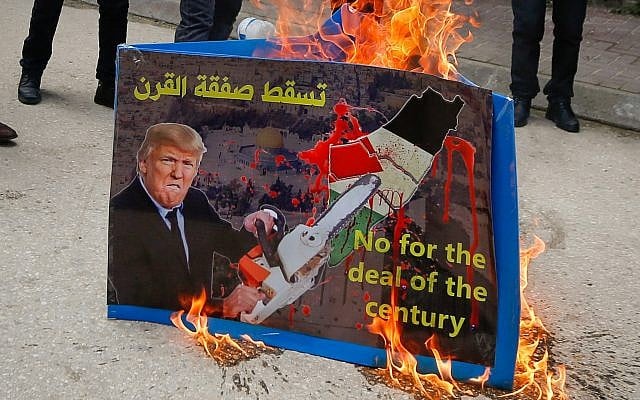
Only a cursory look at Trump’s Gaza plan, revealed during his summit with the Israeli Prime Minister at the White House on Monday, indicates that the Israelis have not yet achieved their military objectives after more than two years of bloodshed and ethnic cleansing in Gaza. In fact, both Trump and Netanyahu seek to seize control of Gaza and totally eradicate Hamas under the guise of “ceasefire”. Following the anticipated meeting between Trump and Netanyahu, characterised as “efforts for a ceasefire in Gaza”, both parties made remarks literally irrelevant to ceasefire or peace initiatives. Trump’s outlined proposal stipulates the release of all Israeli soldiers in return for thousands of Palestinian detainees, the removal of Hamas from power, and a gradual withdrawal of Israeli occupation forces from Gaza, although many observers concur that the Israeli troops would never abandon their positions.
The next stage involves the disarmament and complete surrender of Hamas. In other words, the very objective the US-Israeli officials have been desperately striving for by stoking a bloody war in Gaza that has claimed the lives of tens of thousands of children. In short, following the slaughter of 680,000 Palestinian civilians in Gaza and the resulting destruction of the city, Trump and Netanyahu are attempting to feign the role of people worthy of gaining the Nobel Prize who have successfully brokered a so-called ceasefire in Gaza.
The strategy includes additional elements, such as the dominance of the United States and the Israeli state over the Palestinian territory, as well as its administration by a war criminal, former British Prime Minister Tony Blair, who along with George W. Bush waged a war on Iraq under false allegations of discovering WMDs. Trump’s “ceasefire” initiative—or, more accurately, strategy to take over Gaza—is the enthusiastic response from the conservative Arab regime, not to mention Turkey, who have embraced it fervently, which is even more astounding.
El-Baradei: Trump’s proposal is a capitulation, not a peace initiative
Mohamed El-Baradei, an Egyptian politician and former director of the International Atomic Energy Agency, remarked on Trump’s proposed plan for Gaza: “I attended the White House press conference concerning Palestine and Gaza and profoundly lamented both the current and future situation of Palestinians and the broader Arab world, as what was being proposed was not a peace initiative but rather a capitulation scheme.” Fawzi Ashmawi, the former Egyptian Deputy Foreign Minister, agrees with Mr El-Baradei, stating, “The essence of Trump and Netanyahu’s comments at the press conference was peace in return for capitulation.”
Response of Palestinian Resistance A communiqué released by Hamas’s Office of the Gaza Administration stated that Trump’s proposal “legitimises the Israeli occupation”. Ismail al-Thawabta, director general of the Hamas-run government information bureau in the Gaza Strip, added, “What Trump refers to as a plan to cease hostilities is neither a just nor genuine resolution; instead, it serves as a bid to enforce a new mandate that legitimises the Israeli occupation and denies the Palestinian people their national, political, and human rights.” The sole means to terminate the conflict must be to conclude the Israeli occupation, abolish the oppressive siege, halt organised genocide, and uphold the inalienable rights of the Palestinian people to freedom, independence, and self-determination while acknowledging their entitlement to establish an independent Palestinian state endorsed by the international community.
The statement further noted that any proposal that disregards the basic rights of Palestinians and considers Gaza only as an occupied territory, disarmed and under foreign oversight, is unequivocally rejected by the collective national consciousness of the Palestinians. In the meantime, the Palestinian Islamic Jihad organisation published a statement opposing Trump’s proposal, asserting, “The announcement made during the press conference between Trump and Israeli Prime Minister Netanyahu constitutes a threat to perpetuate the aggression.” Israel is attempting to impose through America what it could not do through war… We see this American-Israeli proclamation as an attempt to destabilise the region.
Many Palestinians in diaspora also reject this purported US plan, stating that the present discussion regarding Gaza is neither a humanitarian endeavour nor a fair resolution; more so, it is an effort to disguise the imposition of a British mandate as a provisional solution, transforming bloodshed and devastation into a political advantage for the Israeli regime.
Although these plans are presented as a solution to the issue, their substance poses an ontological dilemma for Palestinians and their supporters: Does this plan signify the cessation of the aspiration for an independent state or the inception of a new mandate that perpetuates the aggression under a veneer of “civilised” occupation?
It is unfortunate for me and many of my colleagues in the US to see Whenever the Israeli colonial endeavours encounter an existential crisis, their American benefactor intervenes to alter the political landscape in a manner that guarantees the persistence of the occupying regime, instead of its discontinuation.” The 21-point plan proposed by the President to conclude the Gaza conflict is not an exception; it is a revised edition of the persistent effort to impose colonialism under the guise of diplomatic initiatives.
Is Qatar being deceived once more?
However, hours after Netanyahu extended a formal apology to the Emir of Qatar, it was not for the incursion into Qatari territory but rather for the death of a Qatari national during the Israeli airstrike. Doha has also declared its readiness to intervene once again. Following Benjamin Netanyahu’s apology, the Prime Minister of Qatar declared the nation’s willingness to persist in mediating towards a ceasefire accord concerning the Gaza Strip, as reported by AFP.
Nonetheless, the US President’s 21-point plan for a ceasefire in Gaza incorporates ambiguous and vague provisions about the administration of Gaza, the formation of a Palestinian state, and the withdrawal of Israeli troops. At the presentation of this proposal at the White House, attended by Netanyahu, the US President characterised it as “historic”; nonetheless, implementing its provisions would encounter considerable practical challenges. What will be the governance structure of Gaza? The proposal outlines the creation of a technocratic, non-political Palestinian committee to serve as an interim transitional government responsible for overseeing the administration of the Gaza Strip.
Debunking Trump’s Gaza Plan: No Roadmap, No Authority, No Hope?
Still, it is devoid of procedures for establishing the committee or criteria for member selection. Trump’s proposal fails to clarify the nature of the committee’s connection with the Trump-Blair-led “peace council” or the extent of the council’s daily administrative power regarding a local committee. Will the Palestinian Authority play a role? It appears that the plan mandates that transitional authorities govern Gaza until the Palestinian Authority finalises its reform programme and is able to take power in a “safe and effective” manner. Nonetheless, there exists no designated entity to validate the PA’s preparedness, nor are there any specifications or indications to ascertain whether the PA is competent to assume responsibility.
In summary: there exists no schedule, only a confused statement. The text regards Gaza as a distinct entity, rather than an integrated component of the occupied Palestinian lands, which would have political and legal ramifications. Conversely, Netanyahu seems to have decisively excluded the possibility of the Mahmoud Abbas-led PA’s return to Gaza. What is the process for establishing the international force? The proposal mentions an “international interim stabilisation force” to control Gaza; however, it fails to specify a viable government or elucidate its authority and terms of engagement.
Conclusion: : A Mirage of Peace for Gaza’s Future
Their tasks remain ambiguous: will they function as a military, police, or observation force, and will they confront Hamas or abstain from confronting Israeli troops to safeguard civilians? When will Israel execute its withdrawal from the Gaza Strip? The plan indicates that the Israeli departure would occur “with criteria and timelines pertaining to the demilitarisation process”, but it fails to provide a precise schedule or benchmarks for assessing demilitarisation.
The prospect of Israel sustaining a “security environment” inside Gaza until it considers the area “secure from any renewed terrorist threat” remains viable, without clarifying who would determine whether these criteria are satisfied. Is the creation of a Palestinian state feasible?
The text contains an ambiguous allusion to the potential for establishing a credible trajectory towards self-determination and the formation of a Palestinian state, depending upon advancements in Gaza’s rehabilitation and the efficacy of the PA reform initiative.
The statement presents Palestinians as pursuing independence and statehood as objectives, not as inherent rights. This indicates that the trajectory is susceptible to mischievous interpretation and does not guarantee a definitive result.