
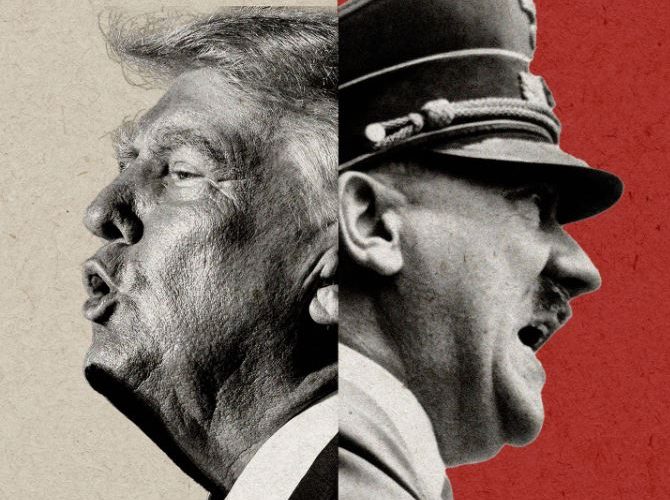
It all started with a short text of less than a thousand words. Вut this presidential order shook the globe’s biggest cultural institution, the Smithsonian. Donald Trump started a campaign of ideological purification under the guise of “restoring the truth.”He wasn’t just targeting an administration; he was trying to assail the very history of a country. Behind the patriotic phrases, Trump’s crusade against history was already taking shape.
The White House aimed to “sanitize” narratives considered divisive and to erase the history of collective pain and the American colonial past, following a logic that transforms shame into pride while denying complexity. Museums, once guardians of a common heritage, came under fire and were impugned as instruments of ideological subversion, reminiscent of the dark days of McCarthyism. The decree, pompously titled “Restoring Truth and Sanity to American History,” sounded like a manifesto of amnesia. Beneath its veneer of bureaucracy, an ideological onslaught of unprecedented brutality lurked.
The Taste of Fear
Within the silent galleries, anxiety spread like an invisible contagion. Curators, once proud of their intellectual independence, demurred to expose the truth. A poorly chosen word or an overly audacious work could now ruin a career. Doubt set in: was it necessary to self-censor to survive? Critical thinking, the foundation of research, was dissolving in the fear of political punishment.
This climate of anxiety reminded employees of the worst reflexes of authoritarian regimes. Culture was becoming a battlefield, not a sanctuary of knowledge. Artists sensed the maneuver: under the guise of moral order, a selective rewriting was being imposed. An art without conflict, without memory, without rough edges—such was the dream of power. The museum of peoples, struggles, and nuances was reduced to an empty pantheon.
Art and Cultural Suppression
Like a baroque despot, Trump sought to reign over the national aesthetic. After the Kennedy Center, he extended his grip to federal museums.People got jobs based on loyalty, not skill. Artists who were against the administration were pushed aside, and their work was called “anti-American.” A boring tune played over and over: flattery and false glamour. A monotonous tune prevailed: that of flattery and false glamour. Yet,beneath its gilded veneer, power dreamed of being both patron and censor. Sculptures questioning race were labeled “ideologically harmful.” Portraits celebrating diversity were threatened with removal. Each room became a territory to be conquered, each cartel a front line. Thus, step by step, Trump’s crusade against history progressed, disguised as national virtue.
The Distortion of Meaning
The Smithsonian, a symbol of universality, found itself drawn into a logic of national atonement. He was expected to praise American “perfection” and efface the suffering of the excluded. Pandemics, slavery, and racial violence all were to be presented as mere detours toward glory. History was transformed into a parable of self-congratulation. Jingoism and false patriotism replaced civic clarity. Officials, paralyzed by the budgetary threat, tried to keep up appearances. But how can one defend the spirit of the Enlightenment when the shadow of power dictates the color of the walls? Even zoology was becoming political: some wondered if the zoo’s pandas were “compliant.” This bureaucratic lunacy, tinged with paranoïa, revealed a larger project: that of total cultural hegemony. Beneath the façade of a democratic empire, a reign of quiet falsification was taking hold.
Graveyard of Truth
In the crypt where James Smithson rests, silence has taken on a new meaning. The founder, who died for the idea of free knowledge, would be incredulous today. His institution, once a beacon of pluralism, is reeling under the blows of a capricious presidency. This is no longer just an administrative conflict: it is a war against conscience. Art becomes suspect, research becomes heresy, and truth becomes an offense. When the state claims to “guide” culture, it is culture that dies. The exhausted Smithsonian employees oscillate between resistance and resignation. Their dilemma is not just professional—it is moral, almost metaphysical. For a nation that manipulates its memory is preparing to betray its future. And if no one opposes it, America will end up building its own museum of lies. Such, in all its darkness, is Trump’s crusade against history.
Conclusion: Cultural Purge and State Control
In July 2025, the Smithsonian removed all references to Trump’s two impeachments from a dedicated room. This decision was no longer a matter of “aesthetic” removal but rather a desire to abolish the judicial shadow. This removal was in line with Trump’s crusade against history: to erase disquieting actions. Officials discussed an institutional overhaul, but the political message went beyond the excuse for the administration. In early October 2025, the White House fired a lot of personnel from the National Council on the Humanities. This purge struck the federal cultural citadel, establishing monetary fear as a mechanism of subjugation. Trump seeks to dictate not only the text but also the framework of the institutions: commissioners, budgets, and appointments. This was the concrete extension of Trump’s crusade against history, a flagrant assault on the truth.