
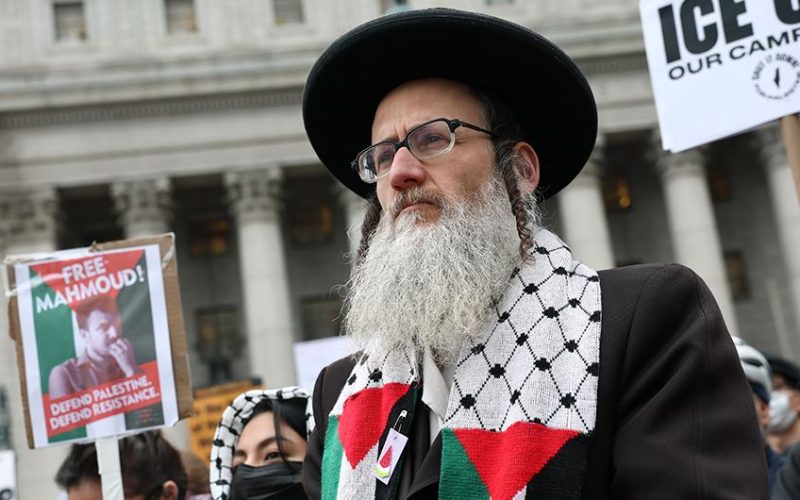
Over the past month, irrefutable evidence has confirmed Donald Trump’s strategy to muzzle pro-Palestine academic voices through federal funding cuts. We will examine how these measures are part of a broader logic of ideological control, how they threaten academic freedom, and how they reveal persistent complicity in Israeli atrocities. Finally, we will propose ways to resist this intellectual retreat by glorifying the critical mission of the university.
The Coercive Logic of the “Academic Compact”
The Trump administration recently proposed a “Compact for Academic Excellence” linking access to grant funding to ideological reforms. This document called for institutional neutrality, controlled admissions, and the elimination of units deemed “hostile” to conservative thought. This approach constitutes unprecedented financial coercion on campuses. This is in line with the explicit threats to cut university funding due to pro-Palestine protests.
The federal judge ordered the return of frozen grants to UCLA, highlighting the arbitrariness of the suspension; at the same time, the administration proposed a $1.2 billion settlement to reform university policies and restore federal aid. At Harvard, Trump announced an imminent $500 million settlement amid threats of complete funding withdrawal; at Tulane, an academic leader was fired after a syllabus mentioning an article on polio in Gaza was censored. This latest case reveals the immediate chilling effect on pedagogical choices related to Palestine.
The Attack on Academic Autonomy
In a recent memo, the Department of Justice redefined “discrimination” to neutralize remedial programs. This maneuver aims to delegitimize equity initiatives and critical scholarship, particularly pro-Palestine scholarship. This confines the university to a formal vision of equality that lacks its historical substance. Thus, any expression of structured solidarity with Palestine becomes a pretext for federal investigation.
A report by Scholars at Risk reveals approximately 40 attacks on academic freedom in the United States in 2025. These attacks include funding cuts, threats to international researchers, and censorship of educational programs. This institutional shift reverses the intellectual mission of universities: from sites of critique to bastions of conformity. Federal pressure has become the new norm, undermining collective academic autonomy.
The Political Implications of Trump’s Action
Silencing the pro-Palestine academic voice contributes to the silence surrounding the crimes committed in the West Bank and Gaza. Muzzled academics become unwitting auxiliaries of a learned complicity. This stance governs the hierarchy of legitimate subjects at the university: Palestinian suffering is delegitimized. As a result, the university ceased to be a critical watchdog of power and became an instrument of dominant politics.
The freeze on $584 million in federal funding to UCLA compromised crucial health and technology research projects. Clinical trial participants expressed concern that their treatments would be delayed or interrupted. Moreover, international researchers faced delays or threats of visa revocation, particularly those engaged in pro-Palestine work or activism. Thus, the repression went beyond mere ideological retaliation: it destabilized the entire international academic community.
Conclusion
The State of California, through the governor, declared that it would cut public funding to universities accepting the “Academic Compact.” This political front of resistance committed local authorities to federal coercion. The president of the University of California system warned that the influence of the Trump administration threatened the $17 billion in annual federal grants to the ten campuses. Such coordination between the state, universities, and academic bodies embodies an unprecedented collective defense of institutional autonomy.
Over the past month, Trump’s initiatives have opened a new phase in the war against pro-Palestine critical intellect. Between financial coercion, academic censorship, and the instrumentalization of legal texts, the university is under attack at its core. Yet history shows that institutions of knowledge only survive if they resist the pressures of authoritarianism. Thus, defending the pro-Palestine academic voice is not only a matter of conscience but also a condition of free intellectual life.