
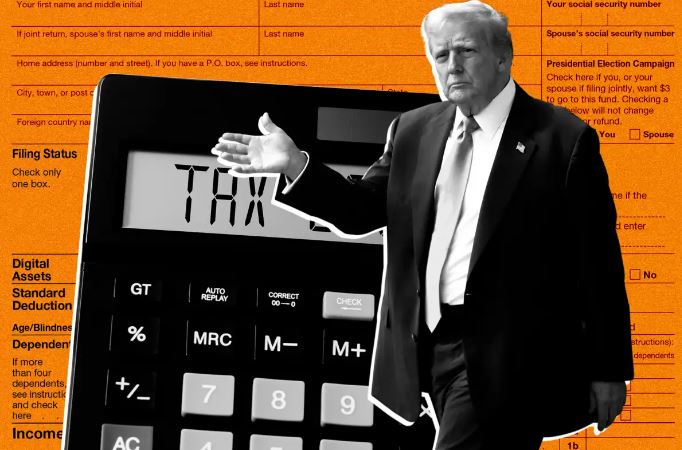
President Trump has proposed a novel idea for “wealthy patriots”—positing that wealth can stimulate economic growth. He says these people will protect the country’s finances, but this is not true. But behind this economic facade is a strange doctrine that doesn’t fix problems but worsens them, leaving communities full of despair.
Although his ideas suggest prosperity, the reality remains a perilous cycle of socio-economic decline. Trump shows his populist power by protecting the rich from responsibilities and framing dissent as a threat to national loyalty. These kinds of actions seem ridiculous and go against the principles of democracy. They are led by a demagogue whose unwavering loyalty to the rights of the elite weakens social cohesion. The gap between rich and poor is huge, and public support for those in need is still low. This shows the truth of the saying that unchecked inequality always leads to instability.
The Economic Fallout
Recent climate events and social unrest indicate that we are on the brink of disaster; heatwaves, rising utility costs, and protests in cities are all making life harder for regular people. The government is behaving in a confusing manner and lacks the foresight to prevent disasters from occurring. The situation can only worsen without a clear recalibration.
What looks like policy guidance is actually anything but beneficial; it keeps unfair inequalities going that could tear apart the social fabric completely:Exemption as a Variable in Sociology Trump’s tax cuts and sending federal troops help show how priorities can be contradictory. By shielding the wealthy from tax responsibilities and dispatching 2,000 National Guard troops to Los Angeles a few months ago—significantly exceeding the 300 requested—he conveys a political message: the economic elite remain unaffected, while ordinary citizens bear the consequences of systemic failures.
Tax Exemption as a Societal Variable
Tens of thousands protested ICE raids, but his rhetoric makes dissenters look awful by calling them invaders instead of people with valid complaints. Think about Los Angeles: it has almost 4 million people; the average person makes about $75,000 a year, but the top 10% of earners control about 50% of the money. Putting soldiers on the streets at a cost of about $150 per day, along with policing and riot control, is an example of arbitrary and hostile government that takes money away from the public’s usefulness while pushing for big tax cuts for the rich.
Analysts, Censure, and Civic Imperatives
The top 5% of earners have an average of $36,300 in savings, while the bottom 5% have only $800. This shows a big difference between wealth and poverty. Criticism, Analysts, and Civic Responsibilities Experts generally concur that clearly defined reforms are necessary for implementation, and policymakers must criticise ineffective strategies. Civic leadership, which was once very enthusiastic, now has to address trivial claims that diminish the significance of human suffering.
The media talks too much, making the problems of the unlucky people worse without giving them any help or advice. Only iconoclastic thinking can save even a small amount of stability by putting established norms next to new ideas. If laws aren’t looked at carefully, they could be cancelled or changed, which would leave people who don’t want to get rich in terrible situations. A policy must stress fairness, make people accept it, and allow programs that help those who are poor because of the system.
Trump: Money, unfair taxes, and an economic disaster
The fight between tax policies and national security has had terrible effects on the economy. Los Angeles lost almost $500 million in property damage in just three days, and it cost $1.1 million a day to send in the Guard. The Big Beautiful Bill, on the other hand, gives wealthy retirees a $1.5 trillion tax break over ten years. This makes the structural problems worse. The top 1% will pay 29.6% in taxes in 2025, while the bottom 20% will only pay 2.9%.
People of different generations are getting more and more frustrated, cities are getting more and more violent, and public infrastructure is getting worse. All of these problems are getting worse. The End In the end, the national economy is like a kaleidoscope of dangerous chances and rising risks. It changes all the time, but there aren’t many signs of hope. The United States is heading towards economic collapse, where wealth protects a small number of people while putting a lot of others in danger. The dream of prosperity is getting farther and farther away.
Trump’s ridiculous path can only be changed by moving resources towards working families, fair chances, and changes to the system.