
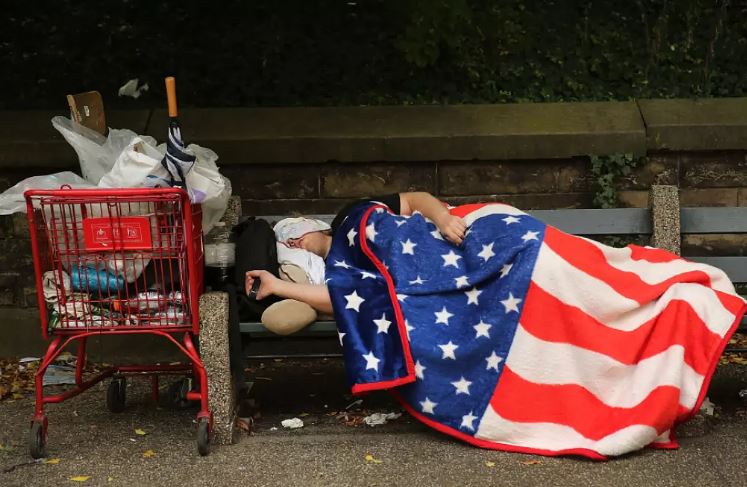
AA recent national survey reveals that most Americans characterize current economic conditions as merely fair or even unequivocally poor; put differently, they deem them as a mirage of a “golden age” economy. Only 28% describe the economy as excellent or good, a stark repudiation of triumphant presidential rhetoric.
Moreover, overwhelming majorities cite healthcare, housing, food, and consumer goods costs as their most pressing anxieties.
Public perception diverges dramatically from White House proclamations of a so-called golden age resurgence. Fewer than one third of adults believe current policies improved economic conditions, while over half report deterioration. The mirage of a “golden age” economy, thus; crystallizes in the widening gulf between official exuberance and quotidian hardship. Such sentiment is neither ephemeral nor partisan exaggeration, but rather a pervasive indicator of structural malaise. Indeed, sixty percent disapproved of tariff increases even before judicial intervention curtailed much of that agenda. Consequently, domestic confidence appears brittle, apprehensive, and profoundly inconsistent with official optimism.
Employment Erosion Beneath Hollow Boasts
Official labor statistics demonstrate employers added merely 181,000 jobs throughout 2025, among the weakest performances outside recessionary intervals.
This anemic expansion contrasts sharply with far stronger job creation earlier in the decade. Manufacturing, once heralded as the lodestar of national revival, instead hemorrhaged 108,000 positions during that year. Although January 2026 registered a modest rebound of 130,000 new jobs, broader deceleration remains unmistakable.
Furthermore, such figures fail to restore lost dynamism or reassure communities reliant on industrial employment.
In this context, the mirage of a “golden age” economy becomes especially visible within shuttered plants and anxious payroll ledgers. Sluggish labor growth inexorably undermines assertions that American workers are flourishing under present stewardship. Hence, rhetorical exuberance confronts empirical evidence of stagnation and diminished occupational vitality.
Tariff Turbulence and Judicial Rebuke
Tariffs constitute a cornerstone of the administration’s economic doctrine, yet controversy persistently shadows their implementation. On February twentieth, 2026, the Supreme Court curtailed significant components of that tariff regime, injecting profound legal uncertainty.
In response, the administration advocated additional global tariffs, amplifying apprehension among investors and manufacturers alike. Notably, 60% of Americans already disapproved of tariff escalations before judicial constraints materialized.
Manufacturers observe that higher duties inflate raw material costs and supply inputs, intensifying inflationary pressures.
Amid such turbulence, the mirage of a “golden age” economy is exposed by the widening disconnect between protectionist promises and rising production expenses. Such cost transmission mechanisms erode competitiveness while compressing already fragile profit margins.
Despite proclamations of protective virtue, tangible, broad-based gains remain elusive for ordinary households.
Therefore, trade belligerence appears to generate volatility and expense without delivering commensurate prosperity.
Faltering Growth and Structural Headwinds
Recent gross domestic product data indicate growth slowed sharply to 1.4% annualized late in 2025. Tariffs combined with a prolonged government shutdown materially eroded earlier economic momentum. Although headline unemployment remains comparatively low, aggregate figures obscure deeper structural infirmities.
Middle- and lower-income households exhibit reduced discretionary spending as financial pressures intensify. Big-ticket purchases increasingly recede amid mounting debt burdens and cautious consumer sentiment. Again and again, the mirage of a “golden age” economy manifests in the fragile underpinnings of expansion that official narratives portray as incandescent.
Today, a plethora of economists warn that continued policy rigidity may precipitate further moderation throughout 2026. Thus, expansion appears modest and fragile, far removed from narratives of incandescent prosperity.
The Relentless Surge of Essential Costs
Independent analyses document rising energy and utility expenses burdening millions of American households nationwide. Projected increases are expected to cost consumers tens of billions of additional dollars through 2028. Electricity prices in 2025 outpaced overall inflation by substantial margins, exacerbating affordability constraints.
Simultaneously, natural gas spot price increases translated into elevated residential heating expenditures.
Utility debt expanded by over 117,000 additional households, revealing intensifying payment distress. In these mounting arrears and unpaid bills, the mirage of a “golden age” economy dissolves before the stark arithmetic of household budgets. Nearly fourteen million Americans now confront serious utility arrears, an alarming indicator of cost insecurity.
Consequently, essential services absorb growing income shares, nullifying purported macroeconomic improvements.
Disproportionate Strain on Lower Income Americans
Nonpartisan nonprofit analyses reveal that recent tax and tariff combinations disproportionately burden the lowest-income 40%. Indirect cost structures effectively raise taxes for certain workers despite ostensible rate reductions elsewhere. Conversely, wealthier households frequently benefit from targeted tax relief and asset appreciation.
Lower-income families allocate larger income shares to electricity and heating, magnifying energy price shocks. Housing affordability remains acute, with many families expending half or more of earnings on shelter. Under such regressive pressures, The Mirage of a “Golden Age” Economy acquires a distinctly inequitable contour.
Real wages struggle to keep pace with rent escalation and persistent consumer price pressures. Therefore, policy outcomes appear regressive, intensifying inequality rather than fostering equitable advancement.
A Nation’s Patience Wanes
Recent national polling indicates nearly sixty percent describe economic conditions as not so good or poor. Substantial shares attribute that weakness to major or minor financial strain within their households. Tracking surveys reveal net economic approval ratings declining, signaling mounting political vulnerability. Housing affordability, cost of living anxieties, and job security dominate voter priorities nationwide.
These concerns stand in conspicuous contradiction to sanguine official messaging emanating from Washington. Against this backdrop of eroding trust, the mirage of a “golden age” economy resonates as a phrase capturing collective disillusionment.
Accordingly, public frustration deepens as quotidian realities belie promises of restoration and grandeur.
Conclusion: The Cost of Delusion
Collectively, these data portray an economy beset by slowed job growth, moderating output, and relentless household cost escalation.
They reveal a populace grappling with insecurity rather than basking in any luminous golden age renaissance. Transitioning from bombast to evidence, one discerns a troubling disjunction between rhetoric and lived experience.
Our nation deserves stewardship grounded in prudence, empirical literacy, and distributive fairness. At the heart of this reckoning stands the mirage of a “golden age” economy, a cautionary emblem of narrative triumph unmoored from measurable well-being.
Instead, Americans confront volatility, legal uncertainty, and policies that magnify inequality. Leadership demands sagacity, humility, and coherent strategy rather than impulsive theatricality.
When governance degenerates into spectacle divorced from economic reality, national welfare inevitably deteriorates. A buffoon showman cannot be president of a great nation like our country.