
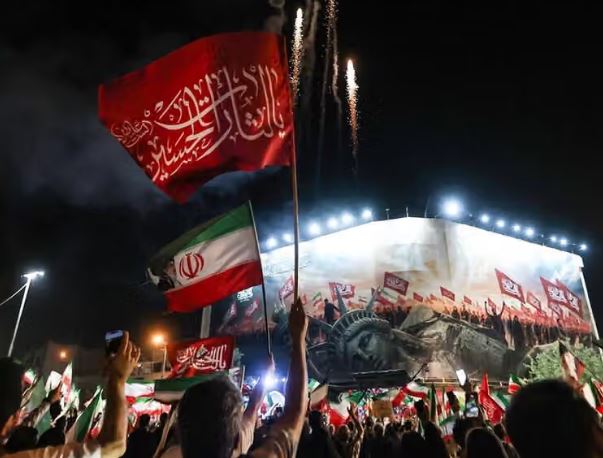
On Wednesday, U.S. President Donald Trump announced a sweeping new economic campaign against Iran, effectively launching an economic war against Iran, describing it as the “MOST CRUSHING ECONOMIC OPERATION EVER TAKEN AGAINST ANY COUNTRY” and accusing Tehran of failing to take an opportunity to reach a deal with Washington.
He warned that Iran would face “Economic Warfare and Isolation on an unprecedented scale.”
Yet as Trump attempts to present the confrontation as a demonstration of American strength, its growing economic consequences are increasingly being felt beyond Iran—including in the United States itself.
Trump has also threatened countries whose banks, businesses, airports or government agencies continue to provide what he calls a “lifeline to Iran.” But the emerging economic picture raises an uncomfortable question for Washington: is Trump’s strategy actually strengthening the United States, or is it creating new economic risks that American consumers and investors will ultimately have to absorb?
Oil, Gas, and the Gasp of the American Wallet
The confrontation – this escalating economic war against Iran – comes at a particularly sensitive moment for global energy markets. The Strait of Hormuz remains largely closed to international shipping, disrupting a vital route through which roughly 20 percent of global oil and natural-gas supplies previously passed.
The disruption pushed oil prices sharply higher on Thursday. Brent crude settled at $93.78 a barrel, while U.S. West Texas Intermediate (WTI) crude rose to $87.83. The increase is likely to put further pressure on American consumers through higher gasoline, transportation and production costs.
For a president who campaigned heavily on reducing inflation and improving Americans’ economic situation, this represents a significant contradiction. Trump may portray higher gasoline prices as a necessary sacrifice for national security, but households do not experience geopolitical strategy in abstract terms. They experience it at the gas pump and in higher prices for everyday goods.
Wall Street has also shown signs of concern. The Dow Jones Industrial Average fell more than 700 points this Thursday, while the S&P 500 also declined. Meanwhile, the yield on 30-year U.S. Treasury bonds climbed above 5.25 percent, reflecting continued concerns about long-term borrowing and fiscal pressures.
Debt, Deficits, and the Endless Dilemmas
The confrontation with Iran exposes a fundamental weakness in Trump’s strategy of waging an economic war against Iran: the United States cannot completely isolate Iran without also exposing itself to the consequences of a global energy shock.
Although the United States is a major oil producer, American consumers remain connected to global energy prices. A sustained increase in crude prices can push up gasoline costs and contribute to broader inflation inside the U.S. That creates a difficult problem for the Federal Reserve. Lowering interest rates could help a weakening economy, but doing so while energy prices are rising could make inflation harder to control.
At the same time, U.S. government debt has surpassed $40 trillion. Persistent budget deficits, tax policies and rising expenditures are already placing pressure on Washington’s finances. Higher interest rates make servicing that debt more expensive, creating another vulnerability at precisely the moment the government is escalating an expensive geopolitical confrontation.
Trump’s strategy also risks alienating countries that have traditionally cooperated closely with Washington. Arab states in the Persian Gulf and Asian economies face substantial exposure to disruptions in energy supplies and international trade. Trump’s aggressive use of economic coercion may therefore encourage some countries to search for alternatives to the very financial system that gives the United States much of its global influence.
The Midterm Mirror – When Voters Count the Cost
To make matters even worse, the economic consequences of this economic war against Iran are increasingly becoming a political liability for Trump. The conflict has lasted longer than many of his earlier statements suggested, while gasoline prices have risen sharply. That is particularly damaging for a president who promised voters lower costs and an end to prolonged foreign conflicts.
Trump has defended the sacrifices, arguing that paying “a tiny little bit more” for gasoline is worthwhile if it prevents Iran from acquiring a nuclear weapon. But that argument may become harder to sell if higher energy prices persist and economic pressure spreads. With approval ratings reportedly near historic lows and the midterm elections approaching, Republicans could also face growing public frustration over inflation, fuel prices and the war.
All in all, what Trump presents as a demonstration of American power in Iran’s case, could ultimately expose something very different: the limits of economic coercion and the danger of underestimating the costs of prolonged confrontation.