
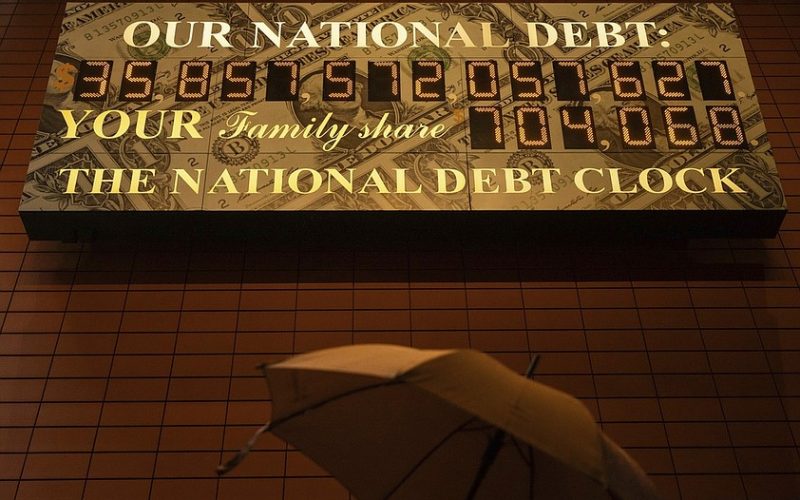
Today, we are facing consequences of the American Debt Crisis; a fiscal abyss. The national debt has reached $37.8 trillion, an all-time high. Every day, the government borrows an additional $25 billion, creating a critical deficit. Annual interest payments exceed $1.2 trillion, already representing 17.98% of tax revenue in 2023. The debt-to-GDP ratio is climbing to 124%, close to the critical threshold for 2021. Thus, the world’s leading power is struggling to manage its debt—a cul-de-sac of fiscal mismanagement from which there seems no easy escape.
An Uncontrollable Debt Spiral
The government has borrowed $1.7 trillion in just a few months since lifting the debt ceiling. At this rate, the debt could reach $40 trillion as early as 2026. Under Trump, it has already increased by $8.8 trillion between 2017 and 2021, from $19.9 trillion to $27.75 trillion.
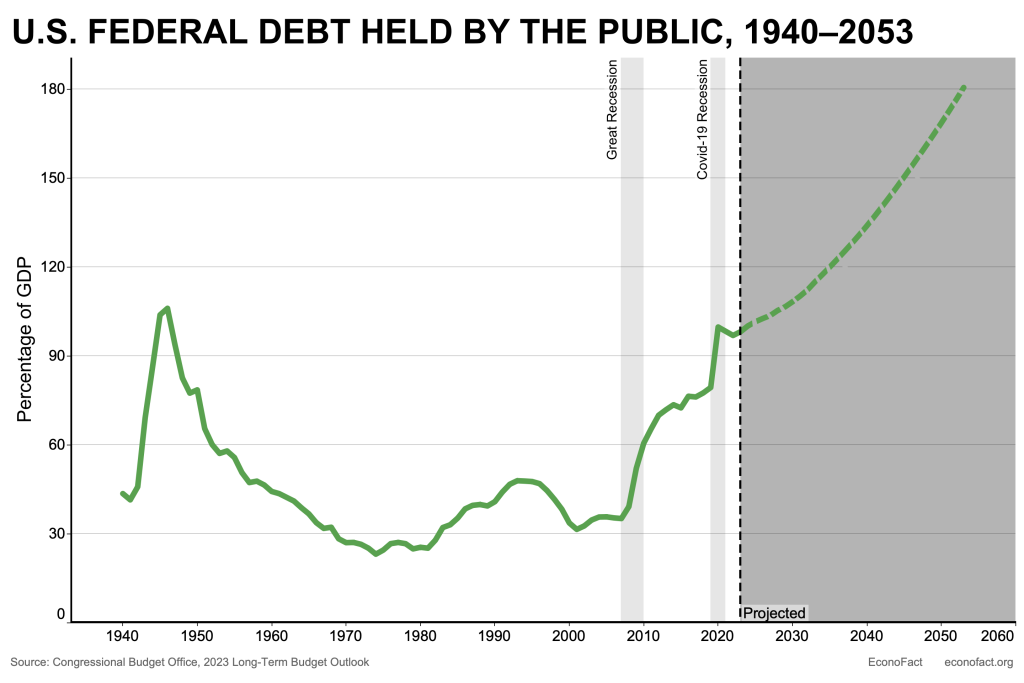
Large annual deficits have fueled this growth. The primary factors are the Tax Cuts and Jobs Act (2017), which diminished corporate and individual taxes, and escalated expenditures, especially in military and social security, without corresponding reductions. This tendency is fostering increasing skepticism in the markets and jeopardizing the stability of the currency—a faux pas with potentially global consequences.
Interests Are Strangling the Budget
Each year, interest payments exceed $1.2 trillion, or 17.98% of tax revenue. This exceeds the defense budget and is approaching that of social security. The Peterson Foundation and Econofact predict that without action, interest costs could escalate to 3.2% of GDP in 2026 and 4.1% in 2035. Every dollar paid to creditors reduces the margin for education, healthcare, and infrastructure. So, the government borrows money to pay off its past obligations, which makes the problem worse and puts everyone at risk all the time. It is a fait accompli that interest costs are now a central threat to fiscal sustainability.
The Underlying Systemic Factors
A multitude of interrelated factors induces persistent deficits. On one side, social expenditure escalates with demographic aging, imposing a burden on the government budget. On the other hand, tax revenues are declining under overly generous policies, limiting room for maneuver.
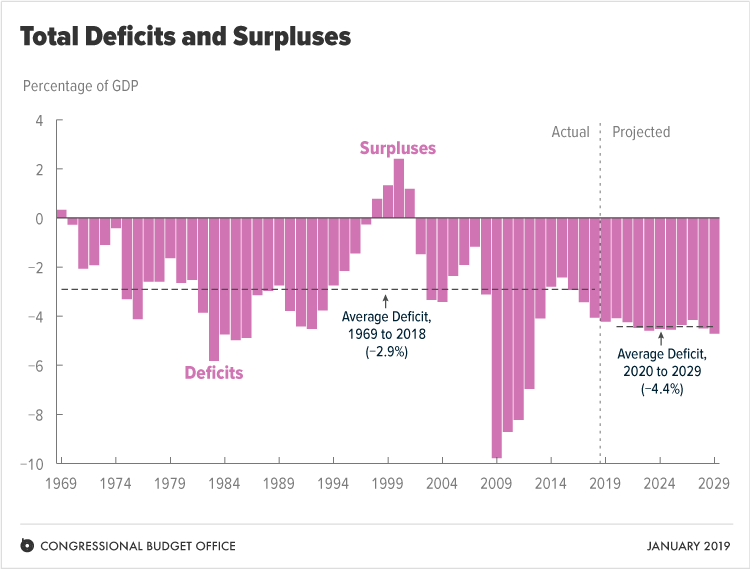
Moreover, Trump’s tariffs caused a 273% year-over-year increase, bringing in $21 billion in only one month. However, this effect is temporary and not enough. The CBO says these steps don’t lower the structural deficit, which is thought to be over $1 trillion a year, so they are delaying the correction needed for economic stability. Such short-term thinking reveals a lack of raison d’être in current fiscal policy—an absence of long-term purpose and responsibility.
The IMF believes that the debt-to-GDP ratio might go up to 143% by 2030 and was 124% in 2023. This trend is causing interest rates to rise and making investors less confident of themselves. We might borrow less money from other countries at lower interest rates. Quickly lowering the deficit would ease market pressures and encourage private investment. We cannot continue to act with insouciant disregard for the warnings of economists and international institutions.
Consequences of the American Debt Crisis for Average Citizens
The issue goes beyond Wall Street and affects people directly. Taxes are rising, and credit is becoming more expensive. Rates on credit cards, mortgages, and auto loans are soaring.
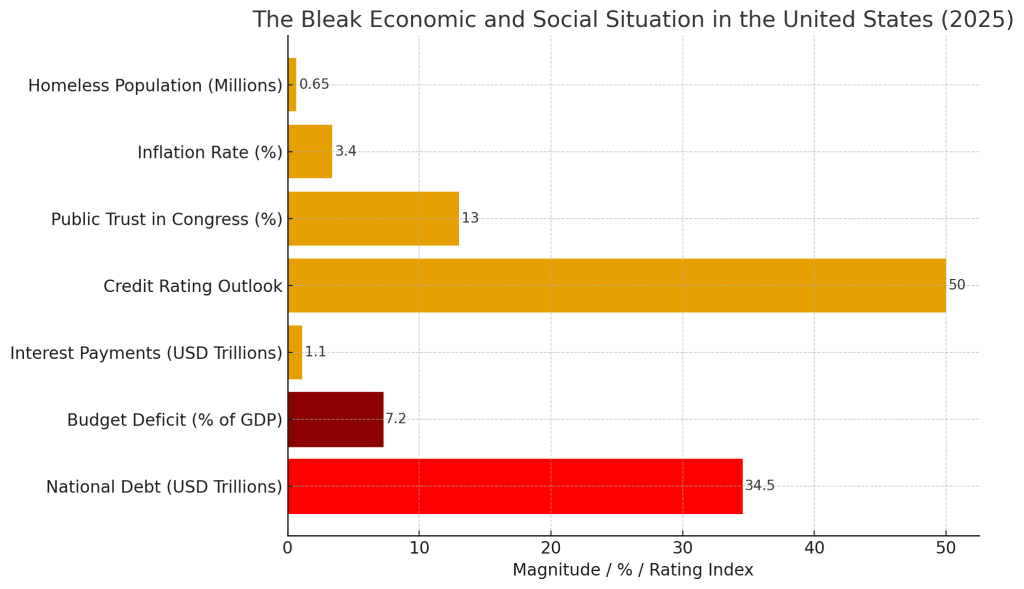
Social programs—pensions, healthcare, and education—are threatened. Low-income households are seeing their purchasing power eroded. Inequality is widening, and domestic growth is slowing. This vicious circle fuels widespread economic insecurity. For many Americans, this moment feels like déjà vu—another chapter in a recurring pattern of fiscal irresponsibility.
Trump’s part in making the debt crisis worse
Trump’s measures made our country’s budget problems worse right away. The Tax Cuts and Jobs Act of 2017 slashed government income by hundreds of billions of dollars per year. Federal spending on military and social services has risen, but no cuts were made. So, the national debt rose by $8.8 trillion from 2017 to 2021, and structural deficits were more than $1 trillion a year. Temporary tariffs brought in only $21 billion, which wasn’t enough to make up for the shortfalls. The debt-to-GDP ratio was 124% in 2023, and the IMF thinks it will reach 143% by 2030. These steps made people less confident in the market, increased borrowing rates, and limited the government’s ability to make future budget changes. Because of Trump’s economic choices, the debt situation became worse, making the US more vulnerable now. He was granted carte blanche by his party, but the cost of that freedom is now being felt.
Conclusion: Prepare Ahead of Disaster
Tariffs and accounting maneuvers will both fail. The US has to change a lot about how it handles money and social issues. Discipline, working together politically, and cutting down on wasteful expenditure are all important. Without swift action, the most powerful economy could become the most vulnerable. Our country is closely bankrupt, and it is slowly moving toward a financial abyss. The recovery must come now, before the debt becomes irreversible. We need bold, even avant-garde leadership—rooted not in ideology but in pragmatic solutions. Consequences of the American debt crisis cannot be à la carte; it must be comprehensive.